
Week Four

Week Four

Week Four

Recap

DMZ is seriously dangerous stuff, but with bellbottoms!
Pemulis has secured a fairly large amount of DMZ, in tablet form, from Antitoi Entertainment, run by a couple of Nucks (*any Canadians consider that a slur? I know I don’t). Pemulis is (thankfully) taking it very seriously, but Hal’s guess that “two, or even three tablets maybe” (p. 213) could be an appropriate dose scares the hell out of me!

It’s November 7th YDAU and Joelle van Dyne, aka Madame Psychosis, is planning on killing herself
In a large three-part section, JvD is going to kill herself at Molly Notkin’s party. The first section is a description of her walk through Boston collecting the equipment she needs to freebase (cigar tube, pepsi bottle, etc)…

Until we are briefly interrupted to discover…We now know what year it is.
With the full list of subsidized years published (p. 223) we can now place the novel in actual time. James Incandenza, born in 1950, died at age 54 on April 1 in the year 2004, aka Year of the Trial Sized Dove Bar. That means subsidized time began in 2002, with the Year of the Whopper, and most of the book takes place in what would have been 2009, the Year of the Depend Adult Undergarment. Endnote 78, which infers that the Year of Glad has yet to be ratified, implies the book itself is being written in YDAU.

Back with Joelle, she passes a cardboard cutout of a legless man in a wheelchair, with a face frozen in ecstatic rapture, and in his cardboard hand a labeless black cartridge case, which Joelle takes out, looks at and puts back in the display…

Until we are briefly interrupted yet again for…“Helen” Steeply’s CV, including brief romantic interludes.
We find out Moment magazine is based in Arizona, where Orin is now based, and where Steeply has been talking with Marathe. Pemulis also mentions Moment as the source of the story about the soldier who dropped DMZ and went off the rails.

The party at Molly’s place used to be Joelle’s apartment, when she was with Orin, and is the possible location where she filmed JOI’s last work (the “allegedly fatally entertaining and scopophiliac thing Jim alleges he made out of her unveiled face here at the start of Y.T.S.D.B” – p. 230 + also more details in endnote 80). I love how Wallace skewers academic parties (I am sure based on his own experience) as snippets of the party are peppered through the description of JvD freebasing Lady Delphina’s coke in the bathroom. We get a brief look into JvD’s past, her own Personal Daddy, the lowPH chemist, a sense of her startling beauty, and her relationships with James and Orin. We also learn that there is a guest there named Alain – a certain Quebecois academic with what appear to be prosthetic legs. 

It’s November 5th YDAU & a conversation between Hal and Orin reveals much about JOI’s death
In preparation for his interview with Helen Steeply, which now appears to be more about James Incandenza’s legacy than Orin’s punting skills, Orin calls Hal to find out more details about his father’s death. The fact that Orin knows so little speaks volumes about the family dynamic. Orin also reveals that he is afraid he is being followed by many men in wheelchairs (p. 244), including one wearing a domino mask.

The details of JOI’s death by microwave oven are just…ugh.

We also learn that Helen is apparently ‘weirdly sexy’ which goes against the descriptions we have had of Steeply’s disguise, from both Marathe and our unreliable narrator, who calls her “enormous, electrolysis-rashed” on p. 142.

This section also contains the brilliant piece about Hal dealing with the grief therapist.

Orin’s statement that the advice Lyle gave Hal doesn’t jive with the Lyle that Orin knew (p. 255) further serves the unreliable narration that infuses IJ, playing with our expectations of linear and trusted narration. Additional side note to this point is the end of the phone call, when Hal starts speaking of nails as the vestiges of talons and Orin’s reaction “I can call back when you are more yourself” (p. 258) is so out of whack with what Hal is saying that we are asked to question if Hal is actually saying something else, or if Orin is hearing something else.

A tennis match between ETA and PWTA
In a section that the narrator admits is “probably not all that interesting unless you play” (p. 258), we get a lengthy descriptive piece about players rankings, playing styles, clothing, as well as the knowledge that Pemulis gets incredibly nervous before a match and that he drugged his opponent to win (p. 281). There is also a detailed description of the raising of the “Lung.”

More Ennet House residents are introduced
Geoffrey Day, Charlotte Treat and Randy Lenz bicker. Gately tries to help Day through his issues with the cliches of AA, Lenz repeatedly asks for the time, and Treat needlepoints. I love spending time in Ennet House, with Gately supine on the couch and the residents nattering all around him, especially Day’s simpering complaints about his expectations of what rehab would be vs the realities of AA.

Have you ordered these bookmarks from Cary yet? Seriously awesome. 

Reflections

The pursuit of intense pleasure is only enjoyable as long as it meets our expectations. For Joelle van Dyne (aka Madame Psychosis), Too Much Fun just isn’t fun anymore. “It no longer delimits and fills the hole. It no longer delimits the hole” (p. 222) Molly Notkin’s party is going to be her OUT, her true exit from the cage. Here we are treated to another beautifully cinematic segment, as JvD walks the streets of Boston gathering the items she needs to freebase cocaine one final time. Echoing Erdedy’s habitual tossing of all paraphernalia (itself done with the short circuited expectation that this action will somehow influence one’s willpower), she rebuilds her weaponry – ready to aim it squarely at herself and eliminate her own map.

Joelle has never seen the completed assembly of what she’s appeared in, or seen anyone who’s seen it, and doubts that any sum of scenes as pathologic as he’d stuck that long quartzy auto-wobbling lens on the camera and filmed her for could have been as entertaining as he’d said the thing he always wanted to make had broken his heart by ending up” (p. 228)

Peppered within this lengthy section are many significant details about Infinite Jest V, that most fatal of all entertainments. Here we are party to practically the entirety of the sum of the details we receive throughout the novel. That they are delivered to us through JvD’s own words and reflections puts its own wobbly lens on the information.

She knows that it is an “allegedly fatally entertaining and scopophiliac thing” and coupled with the snippets of conversation at Molly’s party, it is revealed that the existence of IJ is known to the general public, and that it has already had a fatal impact on more than just the medical attaché’s household (“He said a good bit o Berkely isn’t answering their phone” – p. 233).

What does Joelle feel overhearing these conversations? Does she feel complicit in the creation of this deadly film? She does question her role in his suicide (“Did she kill him somehow, just inclining veilless over that lens?” – p. 231) Her own expectations in becoming JOI’s muse may have begun as a way to better learn film techniques from a master, but it is apparent that the relationship (though platonic) grew into something much, much heavier, ruining her relationship with Orin and further enabling her addiction.

The phone conversation between Hal and Orin also serves to further the narrative of the death of James, and also illuminates the incredibly broken family dynamics of the Incandenzas. Orin did not attend his father’s funeral, and did not have even the most rudimentary information about how he died. The reasons for Orin to break with familial (and social) expectations of mourning must be incredibly significant.

Hal’s encounter with the grief therapist is, obviously, all about expectations. The counselor flummoxes Hal. Hal wants this to be over, but he can’t seem to offer up the appropriate responses. Hal, the golden child, he of perfect test scores and a constant need to meet the expectations of teachers, parents, etc, is at a total loss. As he describes it to Orin, Lyle gave him some solid advice, and Hal was able to turn the tables and serve up what the therapist wanted.

Week Three

Week Three

Week Three

I read this section so quickly, as it just filled me with absolute glee. A few of my favourite bits are in this week’s reading and the pace is fast and furious.  We are also intoduced to Wallace’s increasingly-agitated use of ALLCAPS HEADLINES to really add some flavour to the narratives. This will be a long recap because so many disparate things have happened!

Recap

1. We spend a good amount of time at Ennet house, and learn so much about its history, location and residents including:

  • A brief history of the founder – Guy Who Didn’t Even Use His First Name, who encourages feldspar-munching as a sign of total surrender (p. 137)
  • Brief Interviews with Recovering Addicts – the selected transcripts of (mostly) unnamed residents as they talk to Pat Montesian. I love these small character studies. We now know that Bruce Green, former roomie of harelipped Tommy Doocey, is in Ennet , and that Mildred Bonk and Harriet Bonk-Green have hit the road. (p. 176-181).
  • A detailed description of the layout of the Enfield Marine Public Health Hospital grounds, including the neighboring units for  veterans, Alzheimer’s patients and The Shed, home to the ‘objay darts.’ (p. 193-198)
  • Don Gately – he of the unfortunate break-in that caused the medical attache’s death – has moved from resident to staffer at Ennet.
  • A moving description of ‘exotic new facts’ about various issues that arise with substance abusers (endnote 70 speaks to being able to become so ‘escapeless’ that one becomes no more than a ‘fine dusting of off-white ashy stuff’ – a contrast to the ‘escaping’ results of the Entertainment), and Tiny Ewell’s tattoo investigations, which are a great way to further introduce the Ennet residents. (p. 200-211)

2. These back-to-back vignettes that take place outside of the general actions of the month of November YDAU:

  • The hilarious story of Dwayne R. Glynn and the barrel of bricks – told through an email exchange. Poor guy. (p. 138-140)
  • Hal’s essay about Hill St Blues and Hawaii 5-0, written at age 12, predicting a ‘catatonic hero.’ (p. 140-142)
  • “Helen” Steeply’s article for Moment Magazine (p. 137) – as DFW does often, more information is divulged in the cheeky ALLCAPS title of this section (we now know that Steeply is undercover as a lady to interview Orin, and that James Incandenza committed SUICIDE BY MICROWAVE OVEN). Now we are reminded of Orin’s comments to Hal in the last section in Week Two when mentions he has met ‘a possibly very special somebody” and wants to learn more about Separatism. (p. 142). In the article, the description of the purse snatcher sounds a lot like ol’ Poor Tony. (p. 142-144)
  • a helpful description of the Canadian Anti-O.N.A.N. groups – Love the Calgarian Pro-Canadian Phalanx – especially now in these days of separatist talk. Maybe I’ll start this group! (p. 144)
  • And one of my favourite pieces – the rise and fall of videophony. As someone who HATES facetime, this describes exactly why. Though I also appreciate that in this instance you actually had to play back the video call to see your face. If Wallace only knew the horrors of having to watch yourself WHILE YOU ARE TALKING like we have to. (p. 144-151)
  • A description of the new O.N.A.N. flag “a snarling full-front eagle with a broom and a can of disenfectant in one claw and a Maple Leaf in the other and wearing a sombrero” (p. 153)

3. Over at E.T.A:

  • Urine tests are being held, and Pemulis has it all figured out. We now know that he is the one Kate Gompert mentioned who insists you ask him to “please commit a crime” when buying drugs. (p. 151-156)
  • We are introduced to the incredibly potent DMZ, which is also referred to on the Boston streets as Madame Psychosis. (p. 169-171)
  • A fair amount of (mostly sad) info about Michael Pemulis, our local drug dealer. Who is the “kid” from Ennet House who has sold him the DMZ?  It was heartbreaking that his mother wanted to be paid up front for any of his future earnings as a tennis pro (p. 154)
  • Tennis and the Feral Prodigy – obviously NOT written by Mario – agreed? (p. 172-176)

4. We flash back to Arizona, 1960:

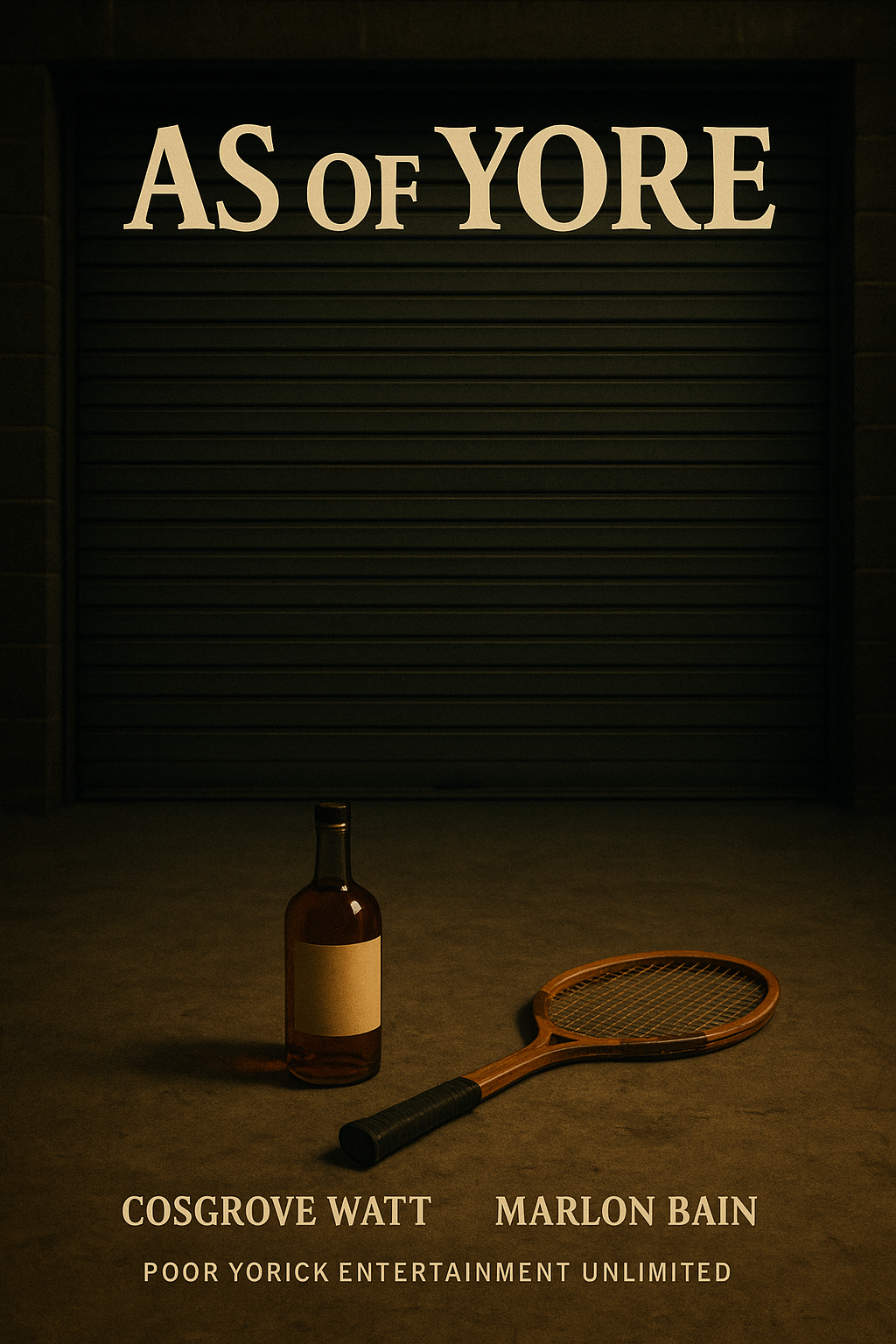
  • This sprawling one-sided conversation (p. 157-69) between father and son is the fleshed out story hinted at back on p. 63 describing how James’ father “decided to go down to his Raid-sprayed basement workshop an build a promising junior athelete the way other fatheres might restore vintage autos…” and was also the basis of the film As of Yore  “A middle-aged tennis instructor, preparing to instruct his son in tennis, becomes intoxicated in the family’s garage and subjects his son to a rambling monologue while the son weeps and perspires.”
  • We now have almost all of the info to figure out when subsidied time started. In the story of James Incandenza and his father, it is 1960, and James is 10, so he died in 2004 in our calendar year, which is the Year of the Trial Sized Dove Bar. We just need to know when YTSDB is situated in subsidized time, and it will be revealed! There have been clues about when each year takes place, but we will see the full list next week…
  • The description of the father’s knees against the tennis court….ugh.

5. A new location and character – WYYY station and Madame Psychosis (it’s October 22, YDAU):

  • Madame Psychosis has many many mentions in JOI’s filmography, and has her first role in Infinite Jest (IV).
  • The station is in M.I.T’s new Student Union building, which is literally shaped like a giant head. With eyeballs hanging out. Gross.
  • Mario loves listening to her program, and it seems he really wants to get Hal’s attention while she is reading the pamphlet for the Union of the Hideously and Improbably Deformed. I looked up so many of these diseases and deformities. Between this and the descriptions of the layout of the MIT bldg it was like taking an advanced biology class.  (p. 181-193)

Illustration by Cam Peters

Reflections

This section seems chaotic and disparate, but there are a few pieces that really vibe together. I am thinking specifically of “Tennis and the Feral Prodigy,” the conversation with James and his father, and the section on what spending time at Ennet house can teach you about addiction.  These three pieces all pulse with the same intention – dispensing advice in a repetitive, meditative way.  A companion to this is the list of maladies and deformities Madame Psychosis is reading on the air from the pamphlet from the UHID (Union of the Hideous and Improbably Deformed).

What are we taking from these sections?
Mario’s short film is a “how-to” of excellence in sport, but rather than being a hype-piece, it oozes exhaustion. We aren’t privvy to the visuals of this film, but can assume what we are reading is narration (by Hal) describing the scenes the viewer is seeing.  There is also an unreliability in it as a literary device, as the film is claimed to be written by Mario, but the language choices and interior descriptions seem very much more coded to Hal.

The senior Incandenza, who James also called “Himself,” goes on and on and on for twelve pages trying to instruct his gangly, nerdy son on how to take control of his body, while the father slowly loses control of his own faculties as the flask is drained dry. The one-sided nature of this conversation reminds us of the challenges James had communicating with his own son.  I loved the humor that was mined from this at the beginning as we only see James through his father’s exasperation (we can imagine how he’s trying to lift the garage door, and how he drops his book on the floor). His cadence reminded me of Foghorn Leghorn teaching the little chicken hawk.  It is again intended to be a “how-to” of excellence in sport, but falls so very short.

And the Ennet house’s “exotic new facts” are not just observations, but instructions on how to survive the vagaries of living in a recovery house, and what to expect from removing substances from your life.  The repetive start of each section with “That..” (Ducks, Newburyport anyone?) is a companion to the “This is..” and “Here is…” of Mario’s film.  These assertions give this info a gravitas in juxtaposition to the rambling lack of paragraphs in Jim’s dad’s words.

Collectively, these sections say to me Its hard. Everything is hard. We have no answers, even when we think we do. But I’m a pessimist 🙂

Standout phrases here include:

“Please learn the pragmatics of expressing fear: sometimes words that seem to express really invoke. This can be tricky” (p.175)

“Here is the trick to being neither quite a nerd or quite a jock. Be no one. It’s easier than you think” (p. 175)

“Madame Psychosis is one of only two people Mario would love to talk to but would be scared to try” (p. 190). Who would the other person be?

DMZ – a very bad thing.
We are given a brief outline of a drug Pemulis has recently copped and tucked away in the lining of his boating cap. The “incredibly potent” DMZ (aka Madame Psychosis) is synthesized using an obscure mold (mold!). The side effects are noted as “temporal” with reports of a radical change in perception of time (e. 57).

Bodies and Heads
Repeating themes of bodies and heads persist. There is the emphasis James’ father put on insisting that the head is the body, and that thoughts are just the sound of your body. The Brain of the MIT building and the Lungs of Enfield. 

And if you’ve made it all the way to the end of this post, I will ask you…what do you call three Canadians copulating on a snowmobile??


Week Two

Week Two

Week Two

More than a few people I have spoken to put IJ down around 100 pages in. So we have just passed a common attrition mark. Congratulations!

And ya know, it makes some sense – there’s a lot going on. We have our first giant endnote (the filmography, and maybe/definitely endnote 304) and a few really expansive sections that don’t seem to further the ‘story.’ 

But there are also many core examples of how DFW weaves information through seemingly unconnected narratives. I’ll recap what we’ve read and let’s start talking about it!

Recap

The majority of this section occurs during the Year of the Depend Adult Undergarment, in April (Marathe and Steeply) and November (mostly, except the segment of Mario and the telescope which happens in October). The yrstruly section is not dated by year, but we know it is Christmas eve.  We now know James Incandenza dies in the Year of the Trial Sized Dove Bar at age 54 (if we find out his birth year, we can place subsidized time on our calendar).

We learn more about James O Incandenza, including his scientific achievements which have helped bring in cold annular fusion (which has led to an independent US energy system, which then has led to the political strife currently between US and Canada), and his conceptual filmmaking. Through James’ filmography, we are given a significant amount of information about what has happened during subsidized time. It’s our first introduction to feral hamsters, outsized feral infants, the elimination of Troy, NY due to misplaced waste displacement vehicles, etc.   Even this far along we can already make the connection between JOI’s life and his work (see It Was a Great Marvel That He Was in the Father Without Knowing Him and the use of Stokely Darkstar in Accomplice! connecting JOI in some way to the narrative of yrstruly).

Orin is playing professional football as a punter in Arizona, has met someone new, and wants to talk about Canadian separatism.

We meet Kate Gompert, whose addiction to weed mirrors that of Erdedy’s in its intensity, and Hal’s in its secrecy. She also buys from Tommy Doocey. I was interested in how she described the ‘feeling.’ It’s one of the best descriptions of clinical depression I have ever read. The resident doctor is so fully fleshed out too, making this an amazing study of their dynamic as well.

The cartridge that took the medical attache is now responsible for upwards of 20 catatonic states in a comedically escalating scale.

We learn a lot about Enfield Tennis Academy in these sections, getting a better understanding of Michael Pemulis, Gerhardt Schtitt,  Jim Troletsch, James Struck, USS Millicent Kent, John Wayne, etc, plus weird guru Lyle. The conversations in the locker room and the Big Buddy meetings paint a vivid picture of the tennis academy’s athletic and academic rigour, as well as serving as many small character studies of the students.

This is also our first introduction to another important location in IJ – Unit #6 of the Enfield Marine VA Hospital (aka Ennet Recovery House)  and the first resident we are introduced to is Tiny Ewell (lil’ Burl Ives).

And now the beginning of the Marathe/Steeply section of the book. Remy Marathe is a duplicitous agent of the Assassins des Fauteuils Rollents (The Wheelchair Assassins), a Quebecois terrorist organization bent on disrupting the U.S.  He sits on a rocky overhang in Arizona, his shadow casting a huge swath across the city below. He is wheelchair bound, a machine pistol hidden under the blanket on his lap. Joining him on the ledge is Hugh Steeply, a U.S. field agent of the Department of Unspecified Services, in disguise as a woman. The two agents meet frequently to exchange intelligence.  A LOT of info is laid out here about the “entertainment,” Canada/US relations, indications that Marathe’s wife is very very ill, the hilarious descriptions of Steeply’s disguise, and the almost impossible (for me) to keep track of duplicity that is going on between them as agents.

We get a small aside about the feral hamsters and the description of the environmental impact of annular fusion being “a drooling and piss-colored bank of teratogenic Concavity clouds.”

Mario and U.S.S. Millicent Kent have a little moment in the woods, and a mysterious tripod is found in the trees.

A wonderful section by ‘yrstruly’ describing a drug run gone bad. The language used in this passage is absolutely delicious. “rickytick” “elemondae” “not 2Bdenied”

Reflections

The pursuit of individual happiness, which is a thread throughout the novel, often results in a sense of insecurity – we are overwhelmed with choices, moved along by impulses, and chase fleeting feelings of pleasure with little reflection on our own role in the larger world. This butts up against our own understanding of why we do what we do – why we strive, why we love, why we care.

Several sections in these pages speak to this, especially from characters who are motivated by participating in something larger than themselves:

  • In the conversation between Schtitt and Mario, Schtitt’s dismay at the ONAN-ist focus on “the happy pleasure of the person alone” (p. 83).
  • Marathe’s warning to Steeply to “choose with care. You are what you love”
  • The locker room conversation at ETA about striving for The Show, and the questions the Little Buddies have for their Big Buddies about how to navigate through ETA.

There are lots of  fragile personas as well, either unsure of or afraid to show their true selves. To wit:

  • Hugh Steeply, whose disguise Marathe describes as a “twisted parody of womanhood” (p. 93)
  • Marathe, a quadruple agent who posits perhaps he has “merely pretended to pretend to pretend to betray” (p. 94)
  • Orin, who often comes off as incredibly insecure (with his Subjects, and “complicated” relationship with Avril) at this point can vocalize his distaste at the high flying stunts he is made to do yet still has not vocalized his morbid fear of heights to anyone.
  • Tiny Ewell, hinted at that it may be hard for him to accept his addiction.
  • Poor Tony’s duplicity, too afraid to admit his role in ripping off Wo.

That endnote

Now what did you think of endnote 304? There are two endnotes in this section that point to it (39b. and 45). So you flip to 304, and find out its 7 goddamn pages long. Is it meant to be read now? Wallace has asked us to consider it twice, so it seems important to read now.

I would say that the information that comes from this story of le Jeu de Prochain Train is good know, rather than waiting until page 732 (!) to learn the backstory of the Wheelchair Assassins.  I actually loved the format of this endnote as well, reading it through James Struck’s eyes as he attempts to crib an overwritten academic paper for his History of Canadian Unpleasantness class. I laughed out loud when he described wanting to slap the author’s face “forehand, backhand, forehand” (p.1060).

Week One

Week One

Week One

Welcome to the beginning of our Infinite Jest reading club, and the first of thirteen blog posts dedicated to recaps. reflections, and reactions to what we’ve just read:

amanuensis

festschrift

scopophilical

These words are all such delicious morsels.

Wallace has an incredible gift for voice. You can tell he relishes words, and his phraseology is delightful. And when IJ was published 30 years ago (!) his style was like no other.  For me, this book works on three unique levels:

1. As a study in voice. You’ve already seen how Wallace moves between plot-driven sections and character studies. The two segments of Erdedy and Wardine could easily be stand-alone shorts. And while they are loosely connected to the main narrative, they exist mostly as studies in larger themes and mood.

2. As a really fun detective novel. Full disclosure – it took me a few re-reads to get to the actual gist of the plot, mostly because Wallace drops really key information often right in the middle of lengthy dialogue.  As an interesting twist, the only person trying to solve the mystery behind the book (ie: who is disseminating the deadly samizdat) is you.  You’ll meet the two characters whose narrative is mostly used to explain the plot next week (Marathe and Steeply) but even those two are acting as known agents. There really isn’t a character used as the proxy of the reader.  We are on our own.

3. As a post-modern F.U. to narrative structure. As I mentioned in my intro email, while you can read this book on an e-reader or use the audio book, the physical heft of the paperback is in itself a narrative tool, and Wallace weaponizes his endnote structure to playfully fuck with us (at least that’s my take). The decision to place endnotes smack in the middle of a sentence, rather than waiting for the end, only to find yourself expected to read a multi-page conversation, essay or (hah!) filmography before coming back to finish your sentence is just ridiculous. To be asked to heave yourself all the way to the back just for a description of the chemical compounds of a street drug – so dumb, so funny. 


Who’s Who

A significant number of characters are introduced in this first section, and it can be difficult to determine who is key and who is secondary to the story. DFW is already making connections and links across quite a few characters, a technique that will continue through the book.  So far we have met, in general order:


  • Hal Incandenza, a highly intelligent tennis prodigy who we meet at age 18, age 10-11, and age 17.
  • Uncle Charles Tavis (CT), half brother of Hal’s mother Avril and administrator at Enfield and Aubrey DeLint, alumnus & prorector at same.
  • Orin Incandenza, Hal’s older brother.
  • Avril Incandenza, aka “the Moms,” mother of Hal, neurotically afraid of germs and secrets, ‘mover and shaker in prescriptive grammar world,’ accused of cavorting with a series of political resistance agents by “professional conversationalist”
  • Ken Erdedy – drug addict, buying weed from unnamed woman who buys from an unnamed man with a harelip and a snake in a trailer park.
  • James O Incandenza, aka “Himself,” Hal’s father, serious drinker, ‘towering figure in optical and avante garde film circles,” and founder of Enfield Tennis Academy.
  • The medical attache for Prince Q—- and his wife.
  • The world of Wardine, Wardine’s momma, Reginald, Delores Epps (Dolores Epp), Clenette, Roy Tony.
  • Mario Incandenza, the middle son of James and Avril.
  • Bruce Green, Mildred Bonk, little Harriet Bonk-Green, and Tommy Doocey, their harelipped snake-keeper and drug dealer roommate.
  • Students of EnfieldMichael Pemulis, James Troeltsch,  Ortho “The Darkness” Stice, etc.
  • Don Gately, drug addict, petty burglar, accidental murderer.
  • Guillaume DuPlessis (deceased), powerful yet “meek-looking Canadian-terrorism-coordinator.” (p.59)

Recap

When I first re-read IJ I was astounded by just how much is set in motion in these first 60-odd pages. It is dense in character introductions, drops a volume of details about the setting, and contains foreshadowing out the wazoo.  So here’s my quick recap:

Where/When are we?
We know that North American calendar years are now bought by corporations, and we are given some small details about the order – Hal is 10-11 during the Year of the Tucks Medicated Pad, 17 during the Year of Depend Adult Undergarment and 18 during Year of Glad, and James died at age 54 in the Year of the Trial Sized Dove Bar (p. 64).

There has been some sort of political rift between the US and Canada, with North America now referenced as “O.N.A.N.” and a Pan-Canadian resistance seemingly coming out of Alberta and Quebec regarding “the U.S.A’s Experialistic  ‘gift’ or ‘return’ of the so-called ‘Reconfigured’ Great Convexity to its northern neighbour” (p.59).

Technology consists of Inter-Lace viewing cartridges, which can be ordered by mail or spotaneously disseminated, and there is a differentiation made between calling someone using ‘just audio’ and presumably video.

The primary locations of the story are Phoenix, Arizona and Boston, Massachusetts, which are also the two places that Inter-Lace has its manufacturing and dissemination hubs.

The Incandenza Family
Hal is in Arizonza participating in the Whataburger Southwest Junior Invitational tennis tournament. (nb. Whataburger is a real Southern US burger chain, popular in Texas, Arizona, etc). While attending the tourney, Hal is meeting with the U of Arizona to be considered as a student. He is there with his mother’s half-brother Charles Tavis and others from Enfield, the tennis academy he has recently graduated from. Something has happened to Hal. While he apparently is still an incredible tennis player, any attempt to speak, smile, or gesture in conversation results in horrific “sub-animalistic” noises and gestures. The U of A team are having none of it.  Hal’s remark “Call it something I ate” is the (apparent) linking device to a memory Hal shares of eating a piece of mold when he was 5 years old. Could this be the cause of Hal’s current situation?

Hal’s father is deceased, but was a scientist, “a towering figure in optical and avante garde film circles” and the founder of the tennis academy. He was an alcoholic, and very paranoid, believing his wife was having scores of affairs. He once staged a bizarre session with Hal pretending to be a Professional Conversationalist, but his disguise began to slip, and Hal called him on it.

Hal’s oldest brother Orin is a professional football player, and we learn about his neuroses and fears (roaches, heights), his prediliciton for  women  (referred to as “subjects”) who have young children, and his nightmare about his mother’s face strapped to his own.

Hal’s other brother (Hal is the youngest of 3) Mario seems to be physically and mentally challenged. He lives with Hal in the dorm at Enfield and likes to ask a lot of questions.

 The Beginning of the End

Another key movement in this section is the description of the medical attache’s deecision to watch an unlabeled video from the stack his wife had left on the front table. It is addressed to him, with the message “Happy Anniversary” but he doesn’t know what that is referring to. It’s April 1, Year of Depend Adult Undergarment. The last we see of him, he has been rewatching this video on repeat, and has soiled himself in his chair.

An Introduction to Don Gately

Don Gately’s burglary turned robbery at the home of M. DuPlessis (who is mentioned in James’ litany of accusations against Avril in the Professional Conversation section) has also set something critical in motion, as Don unknowlingly kills a very important Canadian terrorist.

Reflections

This section sets the tone for our journey alongside Hal Incandenza. Who is Hal, at his core? What motivates him? Is he a trusted narrator?

I can be an incredibly linear thinker, and so I enjoy reading Infinite Jest for the fabulous connect-the-dots plot rather than as an exercise in exploring the larger themes. Because themes, well you just feel them, you know?

But I also believe we should seek to see what it offers us as a path, a way to explore ourselves, our connection to those around us, and ultimately to perhaps provide a guide on How.To.Be.

Identity, self-awareness, and how we are perceived by others are strong threads of this book, and as such we begin in media res, dropped into the innermost core of Hal. We are trapped with him inside his head. “There is nothing wrong. I am in here,” says Hal (p. 13). He is aware of how monstrous he will present if he attempts to speak, but also seems remarkably chill about it. This young man is trapped, intellectually intact yet unable to express himself, being hauled around and propped up by C.T. and DeLint, and yet we really don’t get to understand exactly how this feels for Hal. He asks of the recruiters “Please don’t think I don’t care” (p. 12), but he spends more time reflecting on the aesthetic qualities of the bathroom floor than expressing the horror we can only believe he must feel because of his situation. Is Hal in a place of such self-awareness that he has hit upon some sort of godhead? There’s a tranquility to his demeanor that suggests this.

The other Hal-centric pieces in this section, including his painstaking efforts to get high in private and his loving yet still distant conversations with his brother Mario give us little understanding of Hal’s inner sense of self, but context a-plenty to better understand his family dynamic and how he is situated within that space. He moves through these scenes like an actor playing a role. There is a considerable lack of agency.

In the first of the flashbacks, Hal is just a child, whose consumption of this fuzzy piece of mold has accidentally set something incredible into motion (if we read p. 12’s “Call it something I ate” at face value). It is a pure action, bereft of intent, and really only affects Avril. In fact it is not even Hal’s own memory, but told to him by older brother Orin.

So let’s have a ‘conversation.’ This segment is so beautiful in its absurdist reveal, and asks for a serious suspension of disbelief, destabilizing the narrative. Who do we trust? Here 10-year old Hal watches and reflects as his father’s absurd attempt at disguising himself as a “professional conversationalist” unravels before his eyes. The theme of talking and not being heard eerily echoes the previous section. It is interesting to note that Hal and James seem to be able to communicate as long as James is in the persona, but as the mask slips, James seems to lose the ability to understand Hal. Again in this segment, Hal reads as emotionally distant, immersed in a ridiculous situation, yet remarkably capable of handling it. This may infer that he has lived in this sort of chaos for a long time, and can brush it off easily.

The character study of Erdedy is a fantastic piece – a short story really – that paints a remarkable picture of the addict’s twisted sense of self-awareness. Ken’s strategy that he employs when he decides that he is done with the weed (burning all of his bridges and throwing away all of his paraphernalia) has time and time again proven to be an absolute failure, yet it is a process that he holds steadfast to. He is able to be at once outside of himself with a clear understanding that this is a pattern, but also powerless to change. The final frame of this story – with Erdedy paralyzed between answering the phone and answering the door, is a perfect illustration of “analysis paralysis” and how Erdedy’s addiction has eroded his sense of self.

If we think of self-awareness as how closely we match the identity that is reflected back on us from others (can we think if it that way?), many of the characters in this section aren’t who they say they are, or they act outside of their stated code: Hal as a secret dope smoker; Don Gately as an accidental murderer instead of a burglar; JOI as a conversationalist; Erdedy as a “casual” dope smoker; even Bruce Green who changes for his love Mildred Bonk. And we are also privy to two sections with an undisclosed narrator, in both the story of Wardine and the face in the floor.

We are also introduced to the visual theme of heads (read into that what you will)…

  • From the very first sentence, Hal is first surrounded by “heads and bodies”, before they resolve into the Deans of the U of Arizona.
  • The stand-out sentence that seems completely out of place on page 16- 17 “I think of John N.R. Wayne, who would have won this year’s WhataBurger, standing watch in a mask as Don Gately and I dig up my father’s head”.
  • Himself stating that a cartridge of identical material to tennis rackets has been implanted in his head. (p. 31)
  • The phone conversation with Orin on page 32 when Orin says “My head is filled with things to say” as well as the first mention of Mario’s oversized skull.
  • Orin’s dream on page 46 of “the Moms’s disconnected head attached face-to-face to his own fine head”
  • the description of the paranoid schizophrenic’s treatment on the CBC program (pg 48).
  • Don Gately’s “massive and almost perfectly square head“
  • M. DuPlessis’s death from suffocation due to the gag and his terrible head cold.
  • The terrifying “face in the floor” on page 62.

So what’s the take-away from this segment of the novel? For me it may be that we are skilled at self-sabotage, we bury our emotions, we allow others to manipulate our own intentions for their gain. In the arc of this narrative, it makes sense that we begin here, and as we follow Hal, and Don, and the rest, we hope to glean something from their journey towards their true selves.