Moby-Dick Week Four

Moby-Dick Week Four

Moby-Dick Week Four

“To read a great book for the first time in one’s maturity is an extraordinary pleasure, different from (although one cannot say greater or less than) the pleasure of having read it in one’s youth. Youth brings to reading, as to any other experience, a particular flavor and a particular sense of importance, whereas in maturity one appreciates (or ought to appreciate) many more details and levels and meanings” – Italo Calvino, Why Read the Classics?

I hope Moby Dick is an extraordinary pleasure for those of you discovering it for the first time. My icebreaker question is; Is there a book you discovered in your maturity that was an extraordinary pleasure for you?

There are many such books for me, but one that leaps to mind is The Black Sheep (La Rabouilleuse), by Balzac, which I read a few years ago. I was not sure what I expected, but it was not the action packed joy ride I got! So much fun!

Recap – Chapters 46-60

Chapter 46 – Surmises
We begin this week’s reading with another glimpse into Ahab’s shrewd nature. Aware that his hold over the crew can only last so long, he gives orders that the ship is to continue to hunt whales, thus keeping the crew focused on their routine duties rather than mulling over the sanity (and legality) of his quest.

Chapter 47 – The Mat Maker
In a wonderfully visual scene, Ishmael and Queequeg are weaving a mat, which Ishmael imagines is the Loom of Time, and himself (free will) the shuttle weaving away at the Fates; warp is destiny; the woof is chance. His dreamy dreams are interrupted by Tastego singing out for a whale. As the boat crews prepare to lower in pursuit, everyone is stunned to see Ahab with five men whom no one had seen before.

Chapter 48 – The First Lowering
Yes! Ahab had smuggled a crew aboard to man his own boat – four men from Manilla and the thin, tall mysterious harpooneer Fedallah. Four boats lower for the whale just as a squall comes upon them. Starbuck’s boat is overturned while attempting to harpoon the whale, and the men must cling to the boat until the morning, when they are rescued by the ship.

Chapter 49 – The Hyena
Ishmael, one of the crew in Starbuck’s boat, is rather dismayed to find that this sort of thing is commonplace in whaling. He goes below to write his will.

Chapter 50 – Ahab’s Boat and Crew. Fedallah
The mystery of the phantom figures is revealed. Ahab, knowing the ship owners would not approve of him risking his life in a whale boat, smuggled his own boat crew aboard. These men now blend in with the general crew, save for the harpooneer Fedallah, who with one protruding tooth and a turban woven with his own white hair, seems more than a touch sinister. How Ahab met Fedallah and what their relationship is remains a mystery.

Chapter 51 – The Spirit-Spout
The Pequod is now in the southern Atlantic, near Argentina. Fedallah sings out for a spout and all boats lower for it, but the spout disappears. In the following nights the phantom spout reappears, always disappearing again before the ship can reach it. The Pequod sets course for the Cape of Good Hope.

Chapter 52 – The Albatross
Just off the Cape of Good Hope, the Pequod encounters another Nantucket whaling vessel, the Goney, on its way home after a four year voyage. The Goney is a desolate craft, its crew, who look like castaways, stare blankly and say nothing. Ahab asks if they have encountered the white whale, but when the captain raises his speaking horn to reply it slips and falls into the sea. A squall prevents Ahab from visiting the Goney. The two ships go their opposite ways.

Chapter 53 – The Gam
Chapter 54  -The Town-Ho’s Story

We learn of the tradition of whaleships when meeting on the ocean of having a social meeting, or “gam”, between the captains and first mates. As a result of just such a gam with a ship called the Town-Ho, we hear a story of mutiny; how a sailor’s beef with an officer leads to rebellion. When the mutineers are punished, the sailor (Steelkilt) plots his revenge against the officer (Radney) but in a moment of divine justice Radney is killed by none other than Moby Dick.

Chapter 55 – Of the Monstrous Pictures of Whales
Chapter 56 – Of the less Erroneous Pictures of Whales, and the True Pictures of Whaling Scenes
Chapter 57 – Of Whales in Paint; in Teeth; in Wood; in Sheet-Iron; in Stone; in Mountains; in Stars.
Ishmael now lectures about how most artistic representations of whales are not very accurate – the reason being that most are drawn from stranded or dead whales, which are about as accurate as drawing ships from their wrecks. Of the good drawings of whales he gives credit to the French. He goes on in his encyclopedic way to talk of whales in folk art, scrimshaw, signs and even the stars.

Chapter 58 – Brit
The Pequod now comes across brit; the yellow substance that Right Whales feed on. Numerous Right Whales are seen, mowing through the brit, but as the Pequod is hunting the Sperm Whale, they leave the Right Whales alone.

Chapter 59 – Squid
Now approaching Java, Daggoo sees a white mass and sings out; “The White Whale!” When the boats reach the spot, however, they find a giant squid. Starbuck declares this a bad omen; “The great live squid, which, they say, few whale-ships beheld, and returned to their ports to tell of it.”

Chapter 60 – The Line
A technical examination of the line attached to the harpoon; what it is made of and how it is coiled. Like the chapter on brit, Ishmael descends into a meditation: “All men live enveloped in whale-lines. All are born with halters around their necks.”
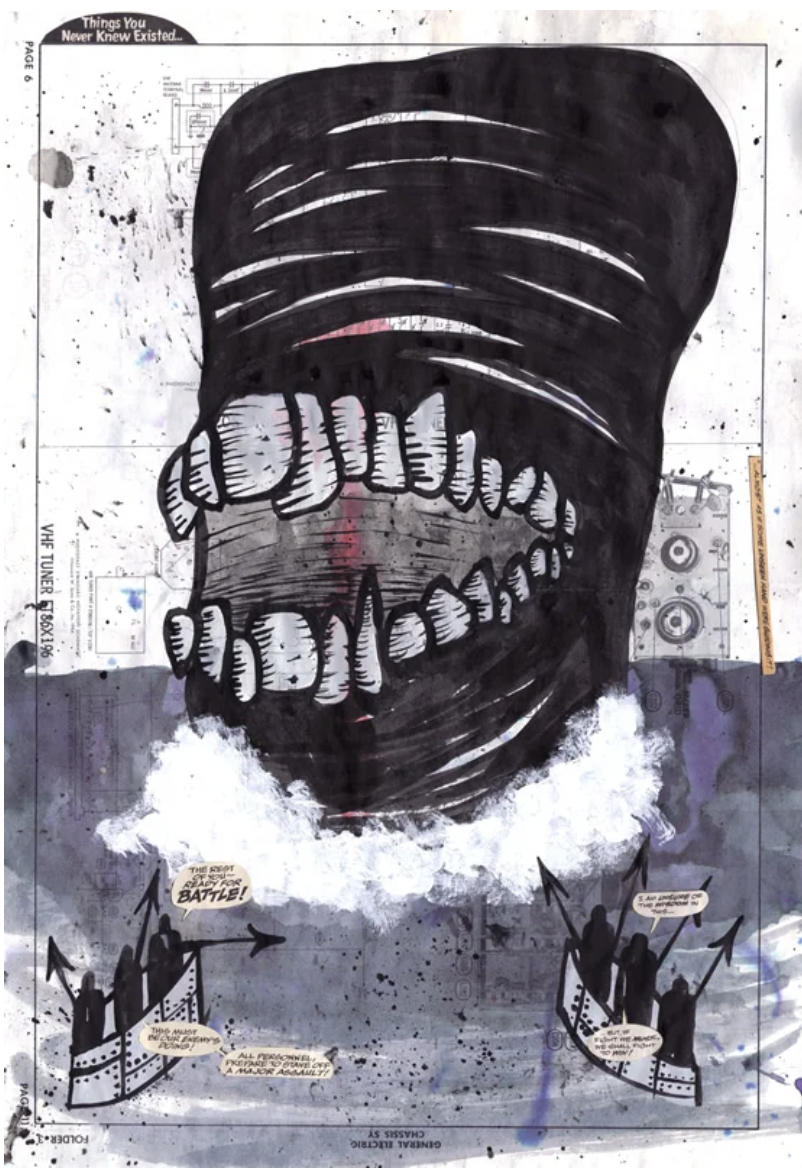
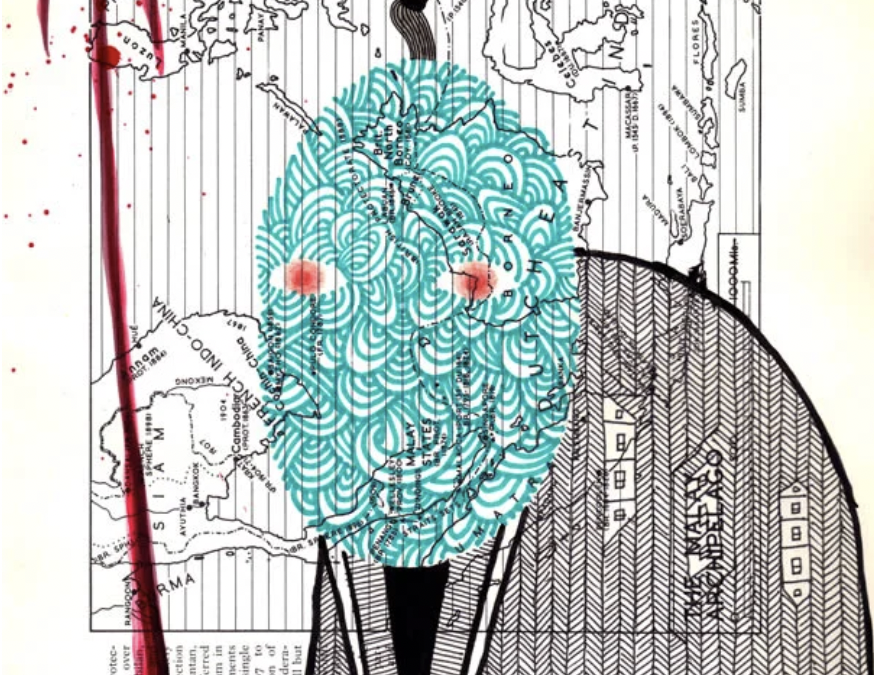
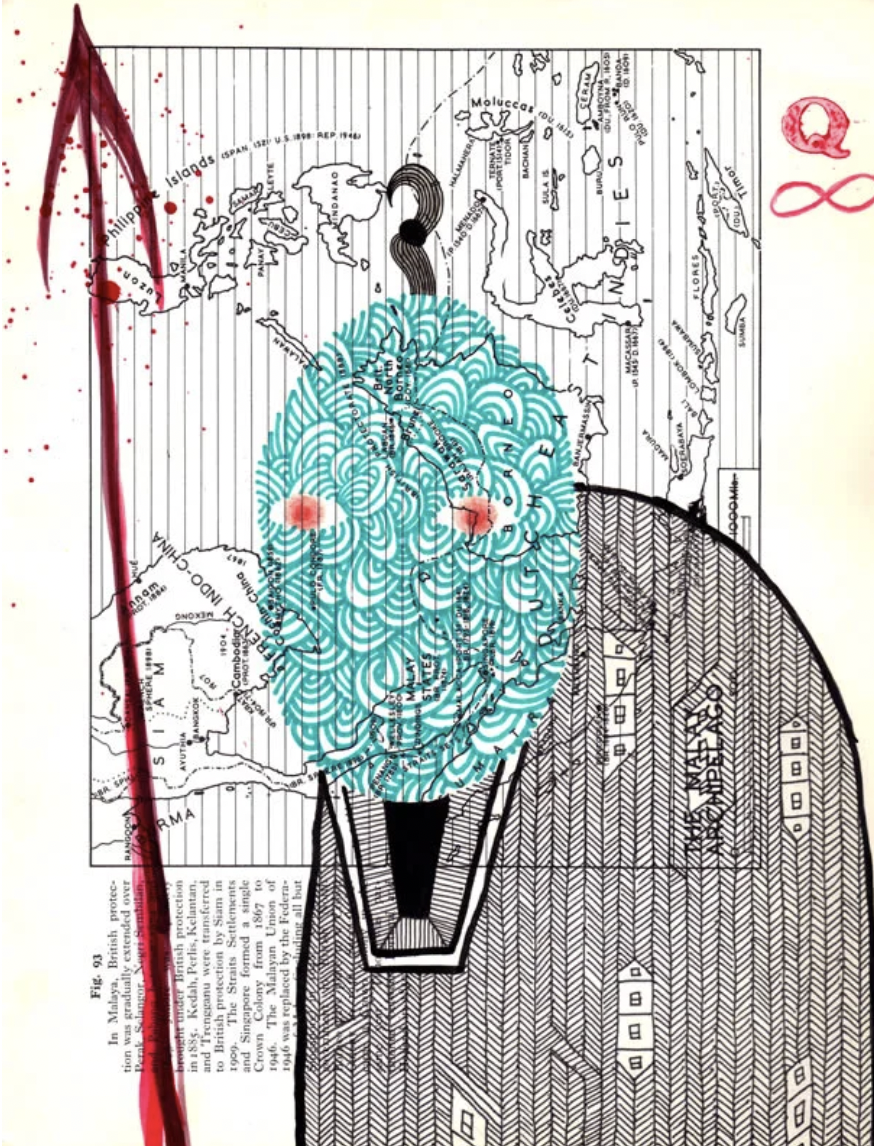
Illustration by Matt Kish

Reflections

Surmises: Once again we see Ahab’s feline cunning in manipulating the crew; “To accomplish his object Ahab must use tools; and of all tools used in the shadow of the moon, men are the most apt to get out of order.”

The Mat-Maker. So much of this book is about fate and free will, and perhaps this chapter is the best example of how in Ishmael’s mind those forces work together to make the mat of our lives. I like how the chapter is structured; Ishmael’s philosophising is cut short by sudden action and the surprise appearance of Ahab’s boat crew.

In The First Lowering we get our first look at boats in pursuit of a whale. The personalities of Starbuck and Stubb are reflected in the way they motivated their men to row. Of Stubb: “He would say the most terrific things to his crew, in a tone so strangely compounded of fun and fury, and the fury seemed so calculated merely as a spice to the fun, that no oarsman could hear such queer invocations without pulling for dear life, and yet pulling for the mere joke of the thing.” Whereas Starbuck’s earnest whispers to his crew are written in parentheses: (Strong, strong, boys!). The book has much to say about leadership styles.

The Hyena
A very funny chapter, but the humour is dark. Ishmael is joking about dying. Kinda makes you think about humour as a defense mechanism against terror.

The Albatross.
Back in The Whiteness of the Whale, we learn that Ishmael is in awe of the albatross, which sailors call the goney. Ishmael refers to Coleridge’s poem, The RIme of the Ancient Mariner. In that poem a sailor kills an albatross that had led his ship out of an icepack. The remaining crew blame this sailor for their subsequent bad luck and make him wear the dead albatross around his neck. Now we encounter this broken down looking ship and crew named for the albatross. Are we supposed to be reminded of the crime committed by the Mariner against nature and see it as a warning to Ahab not to commit a similar crime? Does the Goney present to the Pequod a vision of its own future? I particularly like how the fish that have been following the Pequod all abandon it to follow the Goney, like rats leaving a sinking ship.

The Town-Ho’s Story
In yet another structural transition, Melville embeds the story of the Town-Ho within the novel, and takes us one step further away from the main story by having the tale related by Ishmael many years later in a cafe in Lima. Then all this narrative distance is quickly closed when Moby Dick makes a sudden appearance. It appears that this future Ishmael has done well for himself; holding court with fine Peruvian gentlemen.

Aside from the appearance of Moby Dick, the story of the Town-Ho is interesting because it brings up the subject of mutiny. The reader’s sympathies are with Steelkilt and the mutineers, so the story may be laying the groundwork for future plot developments on the Pequod. At what point is mutiny justified?

Brit; The chapter that begins with a description of Right Whales feeding on brit takes a dark turn as Ishmael talks of the vast destructive nature of the sea; “Consider once more, the universal cannibalism of the sea; all whose creatures prey upon each other, carrying on eternal war since the world began.” Ishmael says that if we were smart we’d just stay on our little green islands and not venture on a sea bent on our destruction. What a reversal from the first chapter in which he says all men are drawn to the sea! What does this say about human nature?
Moby-Dick Week Three

Moby-Dick Week Three

Moby-Dick Week Three

Welcome back! This week’s reading covered a lot of ground (water?), so I hope everyone made it through with all your limbs still attached.

Recap – Chapters 31-45

When we last left the Pequod, Ahab had just given Stubb a severe tongue lashing. Now we see Stubb relating to Flask a curious dream he had in the wake of the incident.

Which brings us to the dreaded Chapter 32, Cetology. This is the coral reef against which many a reader’s ship has broken up on. Twelve pages of the classification of whales into categories and sub-categories.

We then learn much about the chain of command; about how in some foreign whaling fleets command of a ship was divided between Captain and Chief Harpooneer. On American ships however, the chain of command is rigid and linear, as evidenced by the rituals of dinner on the Pequod. We see that the harpooneers have a much more enjoyable time at their meals than the officers do. Queequeg seems to pack away more in a meal than poor Flask eats in a week.

Ismael after a long digression on the history of people climbing up tall things in order to see far away, describes in romantic terms what it is like to man the mast-head.

In Chapter 36, The Quarter-Deck, Ahab gathers the crew and reveals his intention to kill the white whale. Ahab infects all the crew, save Starbuck, with the force of his will..

In the next three chapters, the reader is granted access to the inner thoughts of Ahab, Starbuck and Stubb. Ahab is aware of his mania; “I am madness maddened” and he seems to have been quite calculating in his attempts to win over the crew, likening himself to match to light their small piles of powder. Starbuck is distraught. Stubb is lighthearted. We do not see Flask’s thoughts – perhaps he has none.

The crew celebrate their new sworn purpose and we see sailors from around the globe with various ideas on the best way to party. A Spanish sailor tries to pick a fight with Daggoo, but all is interrupted by a storm, which is too bad because I think we all wanted to see Deggoo kick the guy’s butt.

Chapter 41, Moby Dick, is a big infodump where we get the low down on the legend of the white whale and Ahab’s involvement with him. We also get a summation of how Ahab kept his true vengeful intent hidden until in command of the Pequod and far from the authority of Nantucket.

In The Whiteness of the Whale, Ishmael goes on a long discourse about why the whiteness of Moby Dick is, for Ishmael, his most terrifying aspect.

After a brief interlude in which sailors Archy and Cabaco discuss the possibility of there being men below deck we have not yet seen (those shadowy figures spied by Ishmael and Queequeg back in Chapter 21?)

Ishmael addresses the question of how likely it could be for a ship to find one particular whale it is looking for. If it were just random chance that the Pequod were to come across Moby Dick, then “slim to none” would be a fair description of the odds, but Ishmael assures us that recent advances in tracking the migration routes of whales can give some highly educated guesses as to where to look. Ishmael goes further in defending the plausibility of the story in Chapter 45, The Affidavit, by telling other stories that he can personally attest to of the same whales being encountered by the same individual sailors on occasions of several years apart.

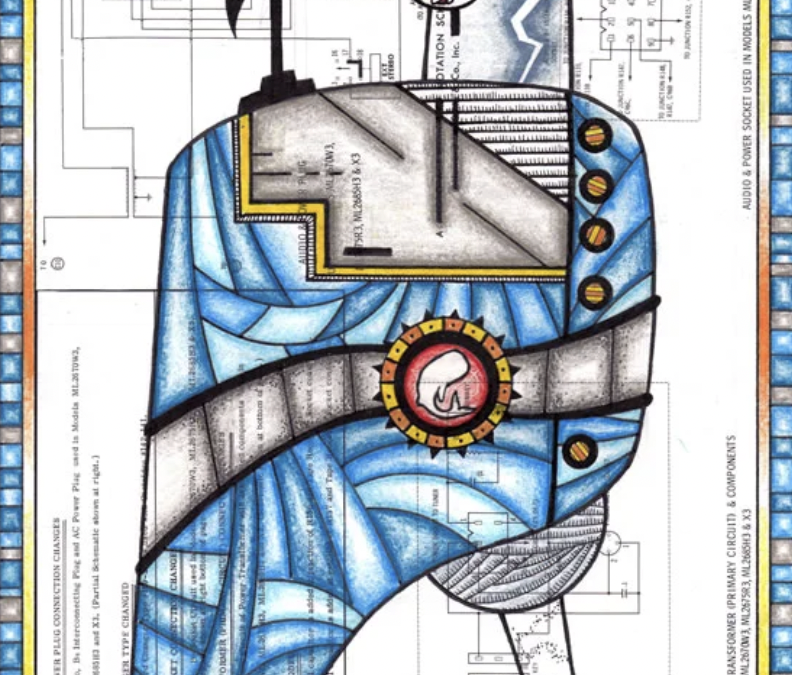
Illustration by Matt Kish

Reflections

The chapter in which Stubb relates his dream is titled “Queen Mab” – a reference to the scene in Romeo and Juliet in which Mercutio tells of the nature of dreams as “the children of an idle brain, begot of nothing but vain fantasy.” To me, this suggests that dreams, which we often see as coming from some external source to give us guidance, are actually the products of our own desires; in this case Stubb’s desire to accept his mistreatment at the hands of Ahab while still keeping his dignity intact. To an outsider like Flask, the dream does not make any sense; “I don’t know; it seems a sort of foolish to me tho’.” Similarly Romeo says to Mercutio; “Peace, peace, Mercutio, peace! Thou talk’st of nothing.” (Act I, Scene 4).

Cetology, while seemingly a long dry chapter, is actually quite interesting for the themes it raises, such as the limits of scientific knowledge. Ishmael, our supposed whale expert, seems unaware of the size of blue whales, but I do not know if blue whales were widely known back then. I really like how Ishmael bases his classification on different sizes of books. Much food for thought here. It is regrettable that Darwin’s On the Origin of Species would not be published until eight years after Moby-Dick, because I think Melville would have made a great evolutionary biologist, but you may disagree. Near the end of the chapter we are given another Shakespeare reference when Ishmael disregards the whale lore that doesn’t fit his system as “mere sounds, full of Leviathanism, but signifying nothing”, echoing Macbeth.

In one of the most descriptive passages, Ismael literally puts us in the mast-head; “There you stand, a hundred feet above the silent decks, striding along the deep …” For me the picture Melville paints for us is not unlike the photo Michael Collins took of the Earth rising above the surface of the Moon. I also love how this chapter ends with Ishmael, a self-confessed daydreamer, giving a warning about losing yourself in daydreams.

In The Quarter-Deck, Ahab’s mania is revealed. There is so much to discuss about how Ahab wins the crew over to his purpose! The infectious nature of passion; how Ahab appeals to the emotional sense of glory over dull commercial commitments.

And the language! Ahab’s speeches are very Shakespearian. Ahab uses ceremony to bond the officers and crew; they all drink (the crew from a passed bottles, the knights and squires from the sockets of the harpoon heads) as they swear allegiance to Ahab’s cause.

As mentioned in our in-person meeting, our first glimpse of the characters commanding the Pequod came in summary form; we were told, not shown, who they were. Now Melville moves to the other extreme, giving us access to the thoughts of Ahab, Starbuck and Stubb. I find these sudden shifts in perspective keep me a little off-balance as a reader, and not knowing what to expect next is kind of exhilarating. We are “at sea” in more ways than one. The soliloquies reveal much about the different attitudes the characters have concerning fate. Ahab is convinced that he can create his own fate; “ I now prophesy that I will dismember my dismemberer. Now, then, be the prophet and the fulfiller one.” Starbuck is conflicted, both amazed that he has been overmatched by a madman, and unsure what step to take next. Ultimately, he decides upon a course of inaction for the present, trusting that the heavens will keep them from ever finding Moby-Dick. Stubb does not see himself as having any choice at all in how things play out; “and come what will, one comfort’s always left, that unfailing comfort is, it’s all predestinated.” He is determined to meet fate with a laugh.

The scene with the sailors in their cups before the mast has some cringe worthy moments ( a Chinese sailor speaking of pagodas, a little black boy made to shake a tambourine and dance) but it seems to me these are not racial stereotypes shared by Melville, but that he is showing how we act out the roles assigned to us; hence the setting as a play. I do like Tashtego’s disdain for all the merrymaking; “That’s a white man; he calls that fun: humph! I save my sweat.

So why does Ishmael find the whiteness of the whale so terrifying? Ishmael leaves no stone unturned as he attempts to find the reason that whiteness causes him such horror. He gives several reasons; that white, a colour associated with purity, seems horrific for creatures that bring death such as polar bears and white sharks. Ishmael also seems to hold the white albatross in reverence, so it is not merely the whiteness that is terrifying – it is the whiteness associated with destruction. Maybe it’s just Ishmael’s quirk. I’ve never found albinos to be repulsive, but he sure does.

Takeaways

Well one big takeaway: How is it that crazy people seem to keep getting in positions of authority?

Reading Moby-Dick in 2026, a reader is sensitive to anything that smells of authoritarianism. What does this book have to say about dictatorial personalities and how they are enabled? Melville seems to have some knowledge of how groups of rational individuals can be whipped up into one irrational mob. In Chapter 41, Ishmael states that he too joined his voice to the others calling for death to Moby Dick. Ishmael? Our erudite and learned Ishmael a mindless member of that mindless rabble? This chapter also speaks to the contagious nature of monomania; how one individual who has evidently figured everything out becomes very attractive to the baffled and confused masses. Perhaps most interesting of all is how the attitudes of the officers also enable Ahab to impose his will. In Chapter 41, Ismael points to “the incompetence of mere unaided virtue or right-mindedness in Starbuck, the invulnerable jollity of indifference and recklessness in Stubb, and the pervading mediocrity in Flask. Such a crew, so officered, seemed specially picked and packed by some infernal fatality to help him to his monomaniac revenge.”

I would like to leave you all with the icebreaker at our next in-person meeting (Monday) and for those who can’t attend, feel free to leave a comment here. When I immerse myself in a book I often find myself thinking about what kind of music would match the images of the book in my head. Do you have any pieces of music that would be your Moby Dick soundtrack? I think a somber, moody piece like Grieg’s The Death of Aase, from the Peer Gynt Suite captures the moments of quiet tension that fill the book, but I also like The Mariner’s Revenge Song by The Decemberists,

Moby-Dick Week Two

Moby-Dick Week Two

Moby-Dick Week Two

Before we begin examining chapters 16 through 30, I wanted to say how great the first in-person discussion was. So many interesting ideas and different takes! One idea that really hit home for me personally was that commerce and culture are intertwined; I have always held a more simplistic view that they are somehow two opposing forces, but this intertwining makes much more sense. If anyone else has a takeaway from the meeting to share with our on-line shipmates, please comment below.

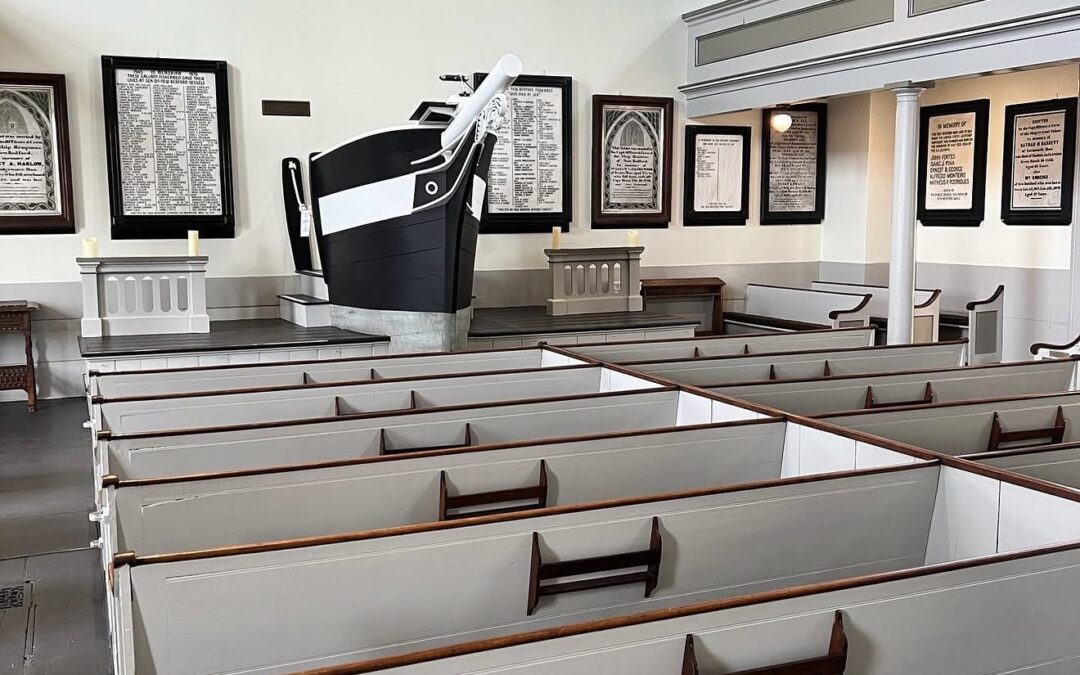
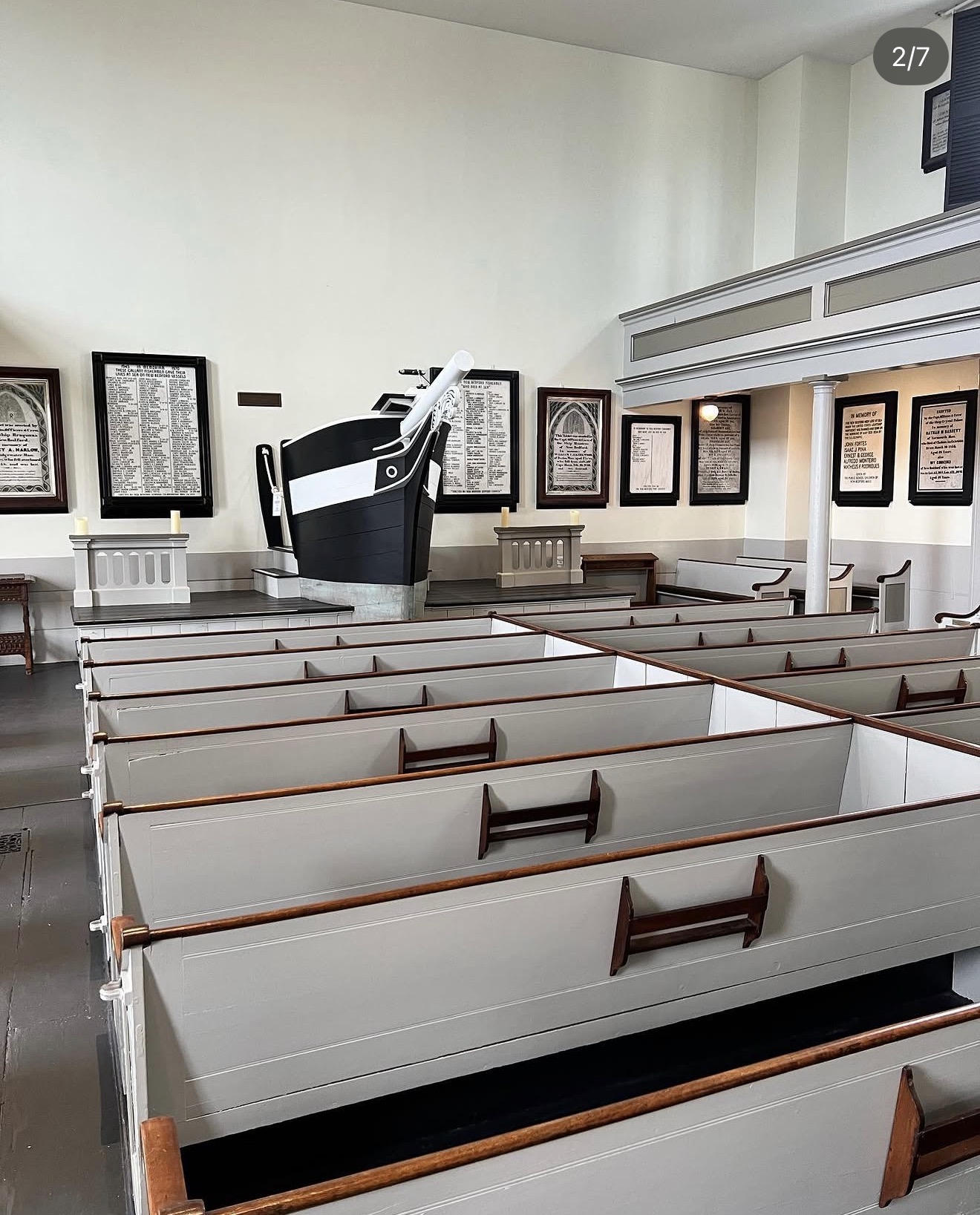
I would also like to share this picture Bradley took when he visited the Seaman’s Bethel in New Bedford. This chapel was built in 1832 and is the model for Father Mapple’s church. Although the bow-shaped pulpit was Melville’s invention, just such a pulpit was added to the bethel in 1961.

Recap

Last we left Ishmael and Queequeg they were chowing down chowder at the Try Pots. The Reader may be excused at this point for feeling a touch impatient; fifteen chapters in and we haven’t even set sail yet! Patience, shipmates. This week we will sign aboard our ship, meet and say good-bye to all three female characters in the book, be introduced to the captain’s mates’ (knights) and their harpooneers (squires) and depart for a journey around the world. We will even meet Ahab!

Off we go.

In bed at the Try Pots, Queequeg reveals that Yojo has decided that Ishmael should go out by himself to choose the boat the two will sail on. Ishmael expresses doubts about the wisdom of this plan, but Queequeg reveals that Yojo already knows which ship Ismael will choose, and that Queequeg must stay behind to begin a religious fast.

After rejecting whaling ships named Devil-dam and Tit-bit, Ishmael decides the Pequod looks like the ship he wants and goes aboard. He meets two of the principal owners; the blustery Peleg and the sober Bildad, and signs on.

Returning to the Try Pots, Ishmael finds Queequeg’s fast is still in progress. After waiting for some time, Ishmael finds that Queequeg has locked himself in their room. Hilarity ensues when Ishmael, convinced Queequeg has suffered a stroke, runs for help. It is at this point that Moby-Dick comes as close as it will get to passing the Bechdel test when the inn-keepers’ wife and the chamber maid join Ishmael in trying to gain access to the room. Once the door is forced, Queequeg is found to be safe but still in his trance-like state, and remains so until morning. Ishmael tries to remonstrate with Queequeg, but is shrugged off.

Ishmeal and Queequeg go to the Pequod where Peleg and Bildad state that only Christian sailors are allowed in the crew, but they change their minds rather quickly after Queequeg demonstrates his skill with a harpoon and he is signed on. Leaving the Pequod, the two are accosted by one Elijah, a dockside prophet of doom who casts all sorts of dark portents about.
We see many details concerning all the work done preparing the ship. We catch a glimpse of Bildad’s sister, Aunt Charity, who brings many of the items that will bring comfort to various crew members. As the time to sail draws near, Ishmeal and Queequeg go to board the Pequod and through the morning fog they see four or five men ahead of them boarding the ship, but before they can investigate Elijah once again accosts them and hints men they had seen may not be found when they go aboard. Indeed, the only person they find on the Pequod is a single sailor fast asleep, but soon the rest of the crew arrives.

It is Christmas day when the Pequod sets sail. Bildad performs the role of pilot, steering the ship out of harbour. Peleg shouts orders to the crew and gives Ishmael his first kick in the bum. Once open seas are reached Peleg and Bildad take leave of the Pequod and return to Nantucket in their side-boat.

In the following chapters Ishmael slips back into his pseudo-intellectual mode, giving many examples to support his claim that those who participate in the whaling fisheries are as grand as any members of the nobility.

In two chapters (both named Knights and Squires) we are introduced to the three officers and their harpooneers. Starbuck, the chief mate, is a serious Nantucket Quaker who seems to be the personification of calm professionalism. The second mate, Stubb, is also a brave whale-killer but a much more jovial one than sober Starback. Last in both authoritative and physical stature comes young third mate Flask, whose bravery is described as a kind of ignorance, as if he is not quite smart enough to be afraid of whales.

When its time to kill whales, these three will each lead an attack boat. Starbuck has chosen Queequeg as his harpooner. Stubb’s harpooneer is Tashtego, an “un-mixed Indian” from the Gay-Head promontory of Martha’s Vineyard. Flask’s harpooneer is Daggoo, a giant African who, like Queequeg, left his native land in his youth.

After many more days of sailing, one fine morning Ahab is at last seen on deck. Ismael describes Ahab as a powerful, grim figure who seems “made of solid bronze” and is so imposing that one does not even notice his whale-bone leg right away. His gaze is fixed, fearless, and of the firmest fortitude. He is obviously not a man to be trifled with, as Stubb soon discovers when he tells Ahab that the report of the wooden leg upon the deck as he walks is disturbing the men trying to sleep below and sparks Ahab’s anger.

Before we get into the reflections, let’s look at some biblical names . We have already talked about Ishmael, but in this weeks’ reading we meet:

Bildad – In the Book of Job, Bildad is a so-called friend of Job’s who, after Job loses his wealth and his children and is covered in painful boils, tells Job that he must somehow be to blame for his own misfortunes.

Peleg – I am not sure that the biblical character of Peleg is significant for anything other than living to the age of 239, which was not that remarkable for those early Old Testament characters.

Ahab – A bad guy in the Book of Kings. Ahab, King of Israel, worships the Canaanite god Baal.

Elijah – A prophet during the reign of Ahab. Elijah defends the worshipers of the Hebrew god, and opposes Ahab.

Seaman’s Bethel in New Bedford

Reflections

The bond between Ishmeal and Queequeg is so well established in our minds at this point, that we may not even notice the peculiarity of their continuing to share a bed in Nantucket, when it is no longer necessary for them to do so. Not that it is any of my business.

We talked a bit about humour in our first meeting, and some of the scenes we read this week are, to me, the funniest in the book. They say humour does not always translate well, and I think this is true when the joke is travelling across a distance of time as well as across languages. Some of the obviously intentionally funny lines still land; “I cherish the greatest respect towards everyone’s religious obligations, never mind how comical,” sounds like something out of a Mel Brooks movie,The good-cop / bad-cop routine that Peleg and Bildad put on to get Ishmael to sign on for poor wages and Mrs.Hussey reaction when she thinks thinks Queequeg has killed himself are both very funny, but to me the funniest character is Elijah the wharf-side prophet, who in my mind’s movie version of Moby-Dick is played by Marty Feldman. Elijah gives me the giggles. My personal feeling is that Melville meant the Elijah scenes to be funny, and that by making them so he prevents gravitas from overwhelming the book. But I am interested to hear if you disagree.

We also talked about our mixed feelings towards our narrator in week one. How he is a bit of a poser, but also a genuine romantic. Those traits are expanded upon in these chapters with his long diatribe on the nobility of killing whales, mixed in with a rather touching reflection on the life of one of the minor characters, Bulkington, who we first met at the Spouter Inn having just gotten in from a four year voyage only to sail on the Pequod after only a few days on land.

My takeaways. Again, the following thoughts are my own. You may think I am a humbug.

The focus on race continues.

Back in Chapter 14 we read the creation story of Nantucket: how it is quite literally built on the bones of the Native Americans. Now, in Chapter 16, we find our whaling ship of choice is named after the Pequods. Known today as the Pequot, this tribe was destroyed in a war with early New England settlers, with many of them killed in the Mystic Massacre in 1637, with the survivors being sold into slavery in the Caribbean. I think the impulse that in later years would see numerous sports teams being named after indigenous peoples is the same impulse that lead to naming the ship the Pequod. I look forward to discussion on this!

The focus on fate and free will continues.

At Yojo’s urging, Ismael chooses a ship “for all the world as though it turned out by chance.” when in fact Yojo knows Ishmaels’ choice beforehand. We revisit this theme in the character of Elijah, the crazed “prophet” who hints that the Pequod is doomed. Elijah also states that Ahab lost his leg “according to the prophecy.”

Religion and Money.

Way back in chapter one Ishmael, while talking of his preference to being paid to having to pay, says; “The urbane activity with which a man receives money is really marvelous, considering that we so earnestly believe money to be the root of all earthly ills, and that on no account can a monied man enter heaven. Ah! How cheerfully we assign ourselves to perdition!” This theme is revisited with a vengeance in the character of Bildad, forever reading a bible and counting pennies.

And here we close the book again.

Moby-Dick Week One

Moby-Dick Week One

Moby-Dick Week One

Welcome to the first of our weekly re-caps and discussions of Moby-Dick. If you were part of the crew that took a thirteen-week cruise on the U.S.S. Infinite Jest, then you are familiar with the format we will follow on this voyage; weekly posts wherein the plot is summarized and reflections are shared prior to in-person meetings where we bounce ideas and impressions around. One of the things I loved about the Infinite Jest exploration was how discussion often focused on things like the various ways an author can shape the reader’s experience, how expectations can be played with, and just how much (or little) an author’s intentions matter. I really hope that kind of discussion will happen on this journey as well. If you can’t make a meeting, then these weekly re-caps are a great place to join the conversation.

If you are finding this book hard to get into, you may find listening to an audiobook will help you settle into the rhythm of the language. The dense philosophical / biblical passages have a musicality to them, and just letting the words wash over you will give a sense of the meaning. If you have a Calgary Public Library card, the audiobook is always available for checkout, and the University of Plymouth website mobydickbigread.com features different narrators; Stephen Fry, John Waters and David Attenborough among others. While the book is big, the chapters are relatively short, so if you can read about two chapters a day (ten to twelve pages) you will stay on pace. If you still find yourself struggling, you may find our weekly meetings will help you connect with the text.

We should also probably address the fact that this book was written 175 years ago, and modern readers may find some content problematic and/or offensive. While I love this book dearly, I respect everyone’s opinions. If you believe this book supports ideas that are harmful, then please feel free to say so. That said, for clarity’s sake I will use some of the language that the narrator uses; Negro. Savage. Cannibal. These words are spoken by characters in the book, and I don’t believe they reflect the views of Herman Melville and they most certainly do not reflect my views. I would like to point out that there is a certain word, and you know the word I mean, that I do not recall coming across in Moby-Dick, which is remarkable. It is certainly a word that Melville, who had been a sailor himself, would have known. Agatha Christie used it in the title of a novel in 1939, and it was used pretty freely by authors much later than that. I think the absence of this word in Moby-Dick speaks volumes.

Before you even cracked the spine on this book you probably had some preconceptions about it. Like Mary Shelley’s Frankenstein, Moby-Dick has become part of the shared cultural consciousness, and like Frankenstein many people who have not read it may have overly simplified ideas about what it is all about. If Moby-Dick was only about one person’s obsessive quest for revenge then it would not have spoken to so many different people in so many different ways over so many years. It is about capitalism, gender, religion, hegemony, science, race, power, fate, free will and much more. You may also find it quite funny.

So, let’s dive in!

Illustration by Matt Kish

Recap

The text proper begins when our narrator, Ishmael, states his desire to go to sea. He then goes to some length to show that such longings are universal to man in general. He talks of his preference for being a paid crewman to paying as a passenger and his reasons for choosing to go on a whaling ship for the first time.

Leaving Manhattan, Ishmael arrives at New Bedford late on a Saturday only to discover that the next packet ship to Nantucket will not leave until Monday. After some wandering he finds a suitably inexpensive lodging house only to discover all the rooms are taken. He has to share a bed with a “savage” harpooner, Queequeg, who very quickly forms a bond with Ishmael that goes well beyond mere friendship.

The next day, Sunday, Ishmael wanders the town and notes the mix of humanity from all over the globe. He attends a church service conducted by the famous Father Mapple, who gives a sermon on Jonah and the whale. Queequeg also attends this sermon.

When Ishmael returns to the Spouter-Inn he finds Queequeg already there, and makes observations regarding the nature of so-called savage and civilized people, concluding that Queequeg is as noble as any Christian. Queequeg performs a ceremony whereby the two are “married”: Queequeg would gladly die for Ishmael, and will share all his possessions with him.

We learn Queequeg’s story. He was born the son of a king on an island “far away to the west and south”. A youth wanting to see the world, Queequeg manages to get aboard a whaling vessel that visits his island. Initially Queeqeeg is motivated to learn from the white people ways to improve the lives of his native people, but he soon discovers that Christians are miserable and wicked. He now feels he can not return to claim the throne because the time he has spent among the white people has made him too impure to rule his country.

Monday morning, the two walk together to the boat for Nantucket. While the people on the street are used to seeing the likes of Queequeg, seeing him in the company of a white man causes many incredulous stares. On the boat a bumpkin who makes fun of Queequeg is swept overboard and then is saved by Queequeg. The captain, who was threatening to have Queequeg arrested for his previous man-handling of the bumpkin, now apologizes.

Arriving at Nantucket, the pair settle into new lodgings at the Try Pots; an inn whose devotion to chowder is astonishing. This seems a good spot to take our leave of them for now, for they will be well fed until we meet them again.

Reflections

While we all have our personal reactions to the book, it is also good to think about what a general reader, be they reading in 1851 or 2026 might think and feel. This will help us figure out why it flopped on publication nearly a decade before the American Civil War, made such a strong connection to readers immediately after the First World War, and persists today.

The book you are reading from may or may not contain the Etymology (Supplied by a Late Consumptive Usher to a Grammar School) and Extracts (supplied by a Sub-Sub-Librarian), in which we are presented much information, some of it contradictory and some of it from fictional sources, concerning just about anything even tangentially touching upon whales. These sections seem designed to establish the authority of the following text, but, to me, the scatter-shot nature of these extracts casts some doubt on the academic credentials of our author (or at least of the sub-sub-librarian who collected them). This is the first of many ambiguities to come.

“Call me Ishmael”. Has ever a narrator who said so much (and Ishmael does seem to luxuriate in language, doesn’t he?) offered so few facts about himself? Call you Ishmael? Is that your name or not? The notes in the edition I am reading inform us that it was once common to refer to any exile as an Ismael. So the narrator sees himself as an exile?

What to make of Ishmael’s declarations concerning the pull of the sea upon the soul? To me, this section reveals a lot about the character of our narrator, who for romantic reasons, will go out of his way to sail out of Nantucket rather than the convenient port of New Bedford. Of all the arguments put forth by Ishmael in Chapter 1, the most compelling to me is the idea that the image that tormented Narcissus is the same image we see in rivers and oceans; that this “ungraspable phantom of life” is a reflection of ourselves.

And speaking of narcissism, I love how Ishmael in jest imagines himself in terms of worldly importance, worthy of a newspaper headline.

While Ishmael is looking for lodging in New Bedford, he stumbles into a Negro church, and views the congregation in detestible terms; “It seemed the great Black Parliament sitting in Tophet” (Tophet being a biblical city where child sacrifice was performed), and the preacher is described as “A black Angel of Doom”. This, our first mention of race in the novel, makes it pretty clear that Ishmael has internalized racist views.

When Ishmael looks about the Spouter-Inn his gaze is captured by a “boggy, soggy, squitchy” painting of indeterminate subject matter. Even when Ishmael decides that in fact it is a painting of a ship in a Cape Horn Squall with a whale leaping over it, this conclusion is merely his final theory as supported by the opinions of the other denizens of the inn. What a rich image! How sure to provoke discussion in study groups!

The sermon of Father Mapple is presented in such a way that the reader is guided to pay attention to it. So much detail is given about the chapel; the many marble tablets in memory of those who perished while whaling, the pulpit being the prow of a boat which Father Mapple must ascend to in a rope ladder. This is a wonderfully visual scene. Although the book is always better than the movie, Orson Welles gave an amazing performance as Mapple: https://www.youtube.com/watch?v=9DAQ8Az5Gpc. There is much to unpack in the sermon, but there is one passage that should particularly resonate with someone who has also read Infinite Jest: “And if we obey God, we must disobey ourselves; and it is in this disobeying ourselves, wherein the hardness of obeying God consists.”

Back at the Spouter-Inn after the sermon that Ishmael experiences a conversion of sorts. He considers Queequeg and, declaring “you cannot hide the soul” is convinced his new friend is possessed of a noble spirit; “I’ll try a pagan friend, thought I, since Christian kindness has proved but hollow courtesy”. When Ishmael says “I felt a melting in me”, is it the internalized racism we glimpsed earlier that he feels leaving him? The chapter ends with Ishmael bowing before the idol Yojo before the two friends climb into bed; “then, in our hearts’ honeymoon, lay I and Queequeg – a cosy, loving pair”. Is this conversion that makes the narrator view himself as an exile?

Of Queequeg’s home island of Kokovoko we read; “It is not down on any map; true places never are.” What a great sentence! How sure to provoke discussion in book study groups!

What are the takeaways from these first few chapters?

For me, (and not everyone will agree with me) the takeaways are:

Promotion of racial equality.

Ismael spends a lot of ink examining the question of race, and seems to conclude that the difference between civilized and savage people is only skin deep. He frequently inverts view points; if Queequeg seems comical for carrying a wheelbarrow, then a ships’ captain is comical for mistaking soup for a fingerbowl. If we approve of Queequeg attending church service, then why should we not approve of Ishmael kneeling to Yojo? Typical adventure stories follow a white man to the wild parts of the world, acting the hero. Here we see Queequeg saving the undeserving white man. To someone reading Moby-Dick without any foreknowledge of its contents, it almost seems like Queequeg is the book’s protagonist.

It is not surprising race would be on Melville’s mind – it was a fundamental issue of his time. Ten years after Moby-Dick was published, the Civil War would erupt. It is interesting that Moby-Dick flopped sales-wise in 1851, and then a year later the best selling American novel of the 19th Century, Uncle Tom’s Cabin, was published. Certainly Moby-Dick is a much more complex and challenging book, so it is not surprising that the simple melodrama of Uncle Tom was more popular. I also think that Moby-Dick is a far more politically radical book than Uncle Tom’s Cabin, for while Harriet Beecher Stowe was calling for an end to slavery, Melville questions the idea of white superiority that made slavery possible. (This view is mine and not everyone shares it).

An examination of the role of religion.

If Melville is not directly challenging religion, he certainly points out that many if not most Christians are pious on the outside, but act in self-serving ways. In Chapter one we read that although “on no account can a monied man enter heaven. Ah! how cheerfully consign ourselves to perdition!” This marriage of religion and commerce will be explored further in the coming weeks.

When Ishmael experiences something like a conversion in his heart in Chapter 10, it is the “civilized hypocrisies and bland deceits”, the “hollow courtesy” of Christian kindness that he is rejecting.

This seems to be a good place to mention Melville’s friendship with Nathaniel Hawthorn, to whom Moby-Dick is dedicated. Examining civilized hypocrisies was Hawthorn’s bread and butter. If you get a chance to read his short stories, you may come to the conclusion that the Puritans were a bunch of assholes who used the guise of religious piety to cover their very sinful ways. I think Melville has adopted this viewpoint.

Examinations of power structures and gender roles.

Early on Ishmael hints that it is the crew, not the captain and officers, who make the ship function. As we have not even made it to the ship we are going to sail on yet, this is only a seed of an idea, yet the seed is planted in Chapter 1: “…the Commodore on the quarter-deck gets his atmosphere at second hand from the sailors on the forecastle. He thinks he breathes it first; but not so. In much the same way do the commonality lead their leaders in many other things, at the same time that the leaders little suspect it.”

As for gender roles, Melville leaves much for the individual reader to decide. Melville could not have written about an openly homosexual relationship, the times he lived in would not have allowed it, but could he be hinting that such a relationship might exist? Does it matter?

Ah, shipmates, I have rambled on.

The End

The End

The End

“And when he came back to, he was flat on his back on the beach in the freezing sand, and it was raining out of a low sky, and the tide was way out.”

There is a definite plus to reading a book that was published thirty years ago – the internet is an abundance of writings, thoughts, arguments and analysis done by countless other readers before us. And, like in so many other subjects, we are only strengthened by the knowledge of those who have come before, etc etc.

But first! Let’s celebrate our own noggins, and our thoughts on what we just read.

So let’s recap (for one last time!) the last 100ish pages of Infinite Jest.

November 20 – Rodney Tine Jr and Sr meet with Glad Bag rep and Tom Veals
Better tested than the No Thankee Hankee, Fully Functional Phil the Prancing Ass, has been developed to warn kids of the impending Entertainment crisis. This section serves to warn us that the Entertainment is on the loose, and being taken very seriously by O.N.A.N.

Gately continues his hospital stay right til the very end
A large portion of the end of the book takes place in Gately’s hospital room, and in flashbacks to his time spent crewing with Fackleman and Kite.

We meet Lyle as a wraith, and now that all makes a lot more sense. Is it Lyle who has been Ortho’s wraith, not JOI? And presumably Lyle is the victim of the sauna accident (p. 971).

We also see the gruesome retribution laid on Fackleman for his fatal decision to take the mistaken football bet and build a mountain of Dilaudid, are introduced to Pamela Hoffman-Jeep (who could be played easily by Natasha Leggero), and are reunited with Bobby C & Poor Tony of the “red leather fags” (p. 129). Also, Gately is watching Orin’s game (described as “The B.U. punter”) on New Year’s Eve before standardized time (P. 916) – likely the same game Gentle was watching when he came up with the idea for standardized time. As Gately and Fackleman sink into a Dilaudid stupor, the film that plays over and over again sounds like JOI’s Various Small Flames. (p. 935).

At one point, Gately has a mirror dream (vision?) to Hal’s comment from early in the book:

“I think of John N.R. Wayne, who would have won this year’s WhataBurger, standing watch in a mask as Don Gately and I dig up my father’s head” (p. 16)

“He dreams he’s with a very sad kid and they’re in the graveyard digging some dead guy’s head up and it’s really important, like Continental Emergency important, and Gately’s the best digger but he’s wicked hungry, like irresistibly hungry, and he’s eating with both hands out of a huge economy-size bags of corporate snacks so he can’t really dig, while it gets later and later and the sad kid is trying to scream at Gately that the important thing was buried in the guy’s head and to divert the Continental Emergency to start digging the guy’s head up before it’s too late, but the kid moves his mouth but nothing comes up, and Joelle van D. appears with wings and no underwear and asks if they knew him, the dead guy with the head, and Gately starts talking about knowing him even though deep down he feels panic because he’s got no idea who they’re talking about, while the sad kid holds something terrible up by the hair and makes the face of somebody shouting in panic: Too Late.” (p. 934).

I really think this is the ‘true’ end of the novel, it’s just not at the end of the book. It is the moment that connects us to the action that happened outside of the end of the book, and projects us into the future, where the book begins.

But it still leaves many unanswered questions, namely:

  • If JOI killed himself in a microwave oven, and considering when Hal describes the felo de se as akin to the “equivalent in kg.s.cm to over two sticks of TNT” and asks Orin “Do you know you have to cut the potato open before you turn the oven on?” (p. 251), how could he even have a head?
  • In Hal’s memory, John Wayne is there (in a mask) and in Don’s Joelle is there (in wings).
  • I know it sounds trite, but do Joelle’s wings signify she is dead/a wraith?
  • If it is too late, does that mean someone has gotten there before? Who would that be? The AFR?

And we get details maybe on how the Entertainment was unknowingly lifted from the robbery of M. DuPlessis by Kite and then brought to the Antitois by Sixties Bob, who traded for “60s related shit nobody else’d even usually want” (p.927). This matches the Antitois description of the man he bartered for “an antique blue lava-lamp and a lavender-tinged apothecary’s mirror for eighteen unexceptional-looking and old lozenges the long-haired person had claimed in a jumble of West-Swiss-accented French were 650 mg. of a trop-formidable harmful pharmaceutical…as well as a kitchen-can waste bag filled with crusty old mossy boot-and-leg Read Only cartridges, sans any labels” (p. 482). There are still many odd pieces to this, including the “West-Swiss accented French” of the old hippie – would Sixties Bob be Quebecois? His last name is Monroe. This would also mean 60s Bob had been in possession of the DMZ, called tu-sais-quoi (the “you-know-what”).

As an aside, the yrstruly section where we first meet C (& experience the moment of his death) connects us to Stokely Darkstar (“don’t share Stokely Darkstar’s works don’t use works off of Stokely Darkstar no matter how sick you are” – p. 129), who JOI used in the brutal film Accomplice! as the AIDS-ridden prostitute, that Mario and Coyle are watching on pages 942-947. I am not going to read too much into the fact that Cosgrove Watt, the other actor in the film, frequently plays the loose role of JOI in his films. Ok I am – do you think JOI was gay, and maybe that was one reason why Avril had so many affairs? Also, the mise en scene of Hal walking in on Mario and Kyle watching this brutal movie while Mario zips up his pants and Kyle is “oddly traumatized” (p. 941) raises my eyebrows a bit.

At ETA, Hal spends more time laying on his back, everyone gets ready for the Gala during the blizzard
Hal seems to be losing his competitive spirit – “It now lately sometimes seemed like a kind of black miracle to me that people could actually care deeply about a subject or pursuit” (p. 900).

Pemulis has “some really important interfacing to do” with Hal (p. 907), but we are never party to it. He wants to speak with Hal about the DMZ, again referred to as “tu-savez-quoi” and Hal dismisses him. We never find out if they have that conversation, which I imagine is about Pemulis losing the DMZ from the ceiling tiles (p. 916).

We learn that Hal has known all along of Avril’s dalliances (p. 957) including her relationship with both John Wayne and Tavis.

We also get a very detailed description of the house Hal grew up in before they moved, and an odd callback to the steamy mirror which on page 16 he describes as having “knife” written on the mirror and here describes it as physically sticking out of the mirror (p. 951).  We are also privy to Hal’s memories of Himself.

The section that describes the scene as the ETA students get ready is not in Hal’s voice, as he is mentioned in the third person, so who is talking? With the laundry list of names mentioned, we could probably do a process of elimination, but I digress. Because are some of the kids maybe DEAD? When the rumor comes that the Quebecois players are in fact adult and wheelchair bound, a couple kids go to check it out and never return (p. 965).

One of the first things I thought when I realized that the end was only a few pages away and that nothing that I considered ‘traditional’ plot was going to get resolved was: Why did DFW spend three of the very dozen pages left telling us about Barry Loach and his lapsed priest of a brother? Of course, it’s not like those pages were going to be spent clarifying what happened to Hal, Orin, Avril, Pemulis, or any of the other characters that were still alive by the end, but the sheer cheek of it all.

Joelle is brought in for questioning by Steeply
The last we see of Joelle in the novel, she is warned by Steeply that she is in “mind-boggling danger” (p. 934) and then next scene she is under technical interview by Steeply (whose methods are much more benign than the AFRs), that confirms more details about the Entertainment, gives us fair assurance that she is indeed scarred by acid – “I used to go around saying the veil was to disguise lethal perfection” (p. 940) – and that the Master was buried with James.

After she leaves the interview, she returns to Ennet House, to warn Pat about the wheelchairs, and “doesn’t see it til she cleared the Shed, the Middlesex County Sheriff’s car…” (p. 958). Something has happened at Ennet House, though the “uniform at the wheel absently feeling his face” makes it seem like the event has happened a while ago, as the police are not necessarily bustling around. I assume Marathe has done something to get his hands on the cartridges in Pat’s office….

But maybe this incident is the “subsequent events’ light” that Johnette referred to back on page 787.   Did Hal come back? Did his final breakdown happen at Ennett?

.. and yet, we are right back at Ennet House for the interface between Pat and the ADA (p. 960-964) but the time is not clear so…

Orin is inside a giant glass tumbler
The AFR are really creative with their technical interviews. As the roaches pour in, Orin screams “Do it to her! Do it to her!” Is he referring to Joelle and inferring that she knows the whereabouts of the Master? Or Avril?

On Endings
The book opens with Hal and ends with Don, and they never have an opportunity to meet. We can expound on this “continental emergency” that seems to bring them together, and know that it must happen between now and the next year when Hal is trying to get into the University of Phoenix. We know something has happened at Ennet House, and that the AFR have sucessfully infiltrated ETA. We know Pemulis is anxious, Avril is still missing, Orin and Joelle are both captured, and that Hal has begun his change. We know Don is interfacing with James. That the book ends in a flashback, with poor Don on yet another cold and weathered beach, 

Leaving you with this quote from Wallace. Let’s talk about it.

“There’s an ending as far as I’m concerned. Certain kind of parallel lines are supposed to start converging in such a way that an ‘end’ can be projected by the reader somewhere beyond the right frame. If no such convergence or projection occurred to you, then the book’s failed for you.”