Week Seven

Week Seven

Week Seven

Each week while I prep for this recap, I grab the pages I’ve just read between my fingers and am always amazed at what a small sliver of the book the week’s reading represented, and within that 1/4 – 1/2 inch of paper how many stories were covered.

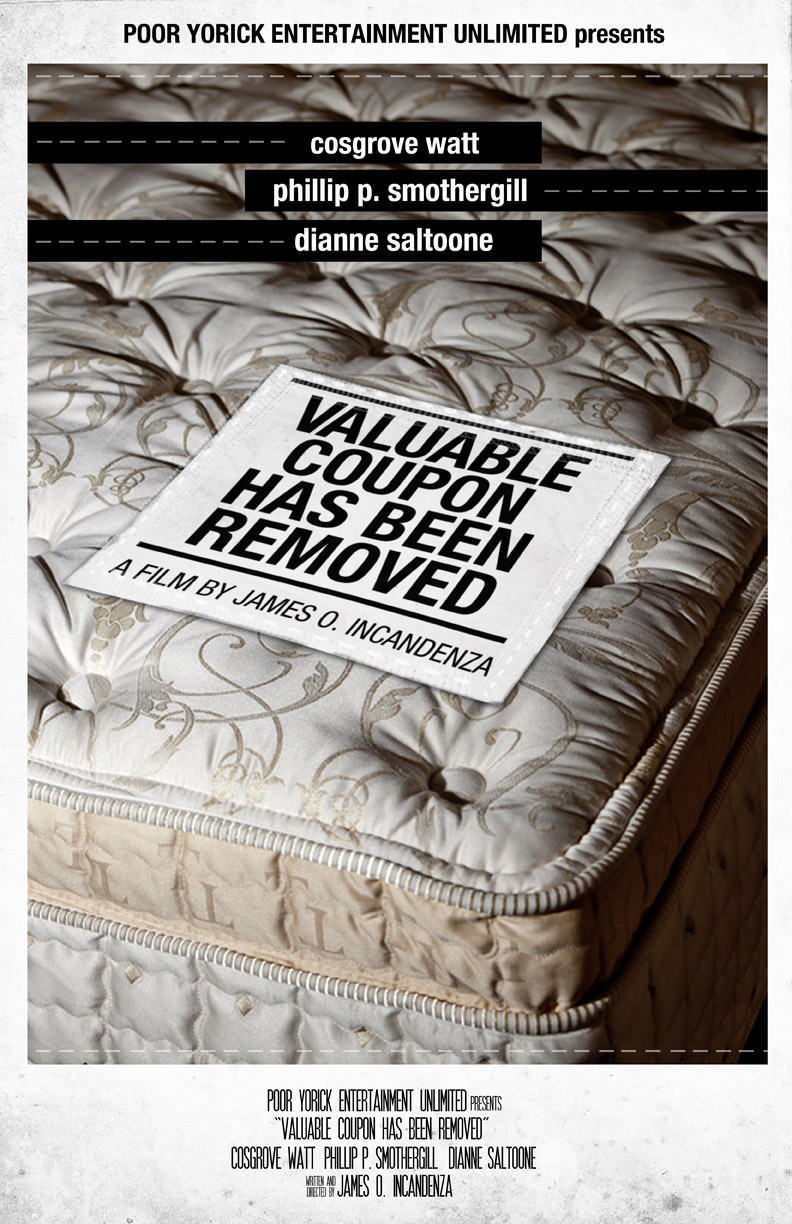
This week, we wrap up a few threads that began last week (Clipperton, the rest of Mario’s film), we spend a lot of time with Don, and learn the intricacies of am drills at E.T.A, get the back story on Pat Montesian, hang out on the ledge with Marathe and Steeply, are privvy to the last moments of the Antitoi Bros. lives, and hear JOI’s voice for the first time, as he reflects on a childhood experience that later became the film “Valuable Coupon Has Been Removed”
Recap & Reflections

The Death of Eric Clipperton
I got a Columbine-shiver at the description of Eric as a “spectral trench-coated figure.” I am intrigued by the relationship between Mario and Eric, and how Mario has never shared even with Hal the details of their conversations, and Mario’s need to clean the room on his own. He and Eric obviously bonded on a very real level. Thoughts on what Clipperton represents? The ultimate desire for the win, the show, taken to its morbid end? Is this the path LaMont Chu is on?

The second cautionary tale, of the un-named kid from Fresno, devolves into dark comedy with the continued Drano poisonings (and the pathos of the little pajama-clad feet -Damn DFW is good with pathos), and very much mimics the death of the Medical Attache et al.

Back to E.T.A, November 8, Interdependence Day film screening
By now, “Hal’s eyes are fevered and rolling around in his head” (p. 438) That seems bad. Mario includes Orin in the history of subsidized time, though a note on chronology states that this would have been historically inaccurate.

My Respect Grows for Don Gately
His steadfast commitment to sobriety, including his daily cleaning of the (shudder) Shattuck shelter, his honesty about struggling to name a higher power, and the story of lil Bim and his vodka-soaked mother…I just want to hug that big galoot. And I don’t want to know what happened to Nimitz the kitty. I loved the description of him driving Pat’s car, and just want happiness for him. But every time I think I am falling in love with Gately, DFW goes an mentions that terrible Prince Valiant haircut.

Time jump back to late October
Hal is dreaming about losing his teeth, and Madame Psychosis is off the air. Mario is agitated after seeing her screen in the booth. This confused me for a moment because I assumed that Joelle’s OD at Molly’s party on Nov 7 was when she would have stopped doing the show, but apparently she had quit the show earlier.

Back to November 9 at E.T.A – Drills and skills
Hal appears to be better than he was yesterday, at least physically. Otis P Lord is back after the Eschaton debacle, but with the monitor screen still on his head with shards dangerously pointing at his throat. Schtitt lectures the boys, speaks of the new type of citizen they are turning the boys into, ones who are “Citizens of this sheltering second world” of the tennis court, inspiring, or demanding, that they put aside the complaints of the outside world (too hot, too cold) and grab the opportunity for a “chance to occur” (pg. 459) within this second world, which is both the court and the mind. Anyone else get a Werner Hertzog vibe from Schtitt?

Marathe and Steeply talk p-terminals, MK-Ultra, and Canadian experiments
I doubt there is a Canadian of a certain age who read this passage without thinking of this Heritage Minute ad (Doctor, I smell burnt toast!). Steeply’s discussion of Canadian scientists developing p-terminal stimulation techniques, and the non-deviant young Canadians who lined up for the leathal treatment is a bit heavy handed in its regard to the Entertainment. We also know that both sides have copies of the Entertainment at the ready!

Bonjour/AuRevoir, Antitios Brothers
I love how Wallace is weaving all of the stories together. As Gately drives Pat’s car through the streets of Boston, the tires send a plastic cup into the air, hitting the window pane of Antitois Entertainment, sending Lucien (who cannot speak French!) to investigate. As he closes the door, it oddly continues to squeak, until he discovers that it is indeed the AFR, come for the master Entertainment tape they believe is being kept by the brothers. Oh that demise. So terrible. It reminded me of The Cook, The Thief, His Wife and Her Lover.

Why does AFR think the master was stolen in the DuPlessis burglary and that the Antitois would have it? Did Steeply plant it then tip them off? Why? If Gately actually did take it while “stripping the Brookline home as bare as a post-feral-hamster meadow” (p. 58) where is the master?

A Different Kind of Squeak
We end this week with an excerpt from “The Awakening of my Interest in Annular Systems,” where JOI, as a recognized pioneer of annual fusion, reflects on the day he realized, um, something important, about how the “cycloid’s standard parametric equations were no longer apposite” and I’m just gonna have to take your word on that James. BUT first, we are treated to the tale of JOI’s drunken father’s attempt to find the cause of a squeak in his bed.  Another amazing example of DFW’s stellar characterizations and dialogue. The filmed version of this story, a ‘possible Scandinavian-psychodrama parody’ actualizes the father’s claim that it sounds like rodents.

Week Six

Week Six

Week Six

In this week’s pages we attend a dark and brutal AA meeting, learn about the birth of O.N.A.N through Mario’s Interdependence Day film screening, follow the growth of Inter-Lace, and talk pea soup with Marathe and Steeply.

Recap

We go out to a White Flag AA Meeting
For thirty-six pages I was sitting in one of those metal chairs, right in the front row next to Gately, truly feeling the howling fantods listening to the speakers as they went on their Commitments. Needless to say, the stories of It and the baby with a serious bio-viability problem were horrifying and heartbreaking, and oh my god there were children there listening! And the story of John L.’s bowel movement was hilarious.

We spend Interdependence Day (post Eschaton) watching Mario’s puppet-filled tale of O.N.A.N.
Like the highly adaptable Eschaton game (see last week’s Decemberists video), I would love to see someone take a stab at recreating Mario’s film. The script is right there, all laid out! The history of O.N.A.N. as told through headlines is one of my favourite parts of this section (I love how we also follow the failing career of a nameless drug-addled headline writer).

Johnny Gentle, Famous Crooner, has come to power with a sweeping victory for the Clean U.S. Party. He has nullified NATO, named himself chief of newly configured O.N.A.N, strong arming Canada to join. It seems Mexico came along fairly willingly. Luria P seems to be the brains behind the ‘gifting’ of much of the now highly-toxic northeastern US to Canada “Allow me to illustrate what Lur – just what the president means.” (p. 403). Intrigue!

The fall of advertising and the rise of InterLace
Hal’s seventh grade paper sheds light on InterLace and Subsidized time, with the failure of network television, the success of Viney and Veals advertising agency (Nunhagen Asprin! NoCoat tongue scrapers! Johnny Gentle’s campaign!) – our friend Ken Erdedy worked for V & V – and Noreen Lace-Forche’s fiber optic pulse, satellite and 4.8 mb diskette service. Basically Netflix, but with news and sports. InterLace is firmly in the Gentle administration’s pocket if headlines are to be believed (p. 392).

Lyle is licking kids and handing out advice
The guru helps LaMont Chu understand the double-bind of fame (“You burn with hunger for a food that does not exist” p. 389) and gives advice to Ortho about his moving bed, as well as a supporting story about the man who didn’t underestimate his chair.

A few of JOI’s films are expounded on
Two of Incandenzas’ ‘anticonfluential’ films (“characterized by a stubborn and possibly irrationally irritating refusal of different narrative lines to merge into any kind of meaningful confluence” – e. 61), Medusa and Odalisque and The Joke are given extended descriptions. The description of the audience in The Joke hit a little close to home for me ☺.

Eric Clipperton, Suicidal Tennis Player
The rest of Clipperton’s story will come next week. We know the film of his suicide is likely buried in JOI’s grave along with Infinite Jest V. Mario crafts a parodic scenario of Johnny Gentle being “willing to eliminate own map out of sheer pique” in reference to Clipperton’s penchant for playing tennis while holding a Glock to his temple.

What would you do for a single serving of Habitant?
Steeply tries to understand why exactly the AFR, with seemingly with no political motivation are so set on causing extreme chaos and death to U.S. citizens. Marathe doesn’t really answer Steeply, but instead counters with his parable of the can of soup, trying to get Steeply to admit that Americans are controlled by self-interest? This section is interesting, because neither agent really succeeds in making his point, or getting the information they are seeking. We are however privy to a detailed description of how ugly Steeply’s feet are.

Reflections

I was completely enraptured by the description of how exactly AA works, according to Gately. The process of Identifying, the trite slogans that you fight against in their seeming meaninglessness, the bottom that is hit, or rather the cliff that you are ready to fall off of, when you finally Come In, face hanging down around your knees, the support the crocodiles, with their geologic amounts of sober time, offer. My heart is definitely with Gately and the Ennet House residents.

By the end of this section that AA meeting seemed really far away though.  On many of my earlier re-reads, before the true chaos of America raised its ugly head and said “we aren’t even going to mask our brutality anymore” I had never really felt much from the story of O.N.A.N.  But after 2016 – ugh. The Totalitarian’s Guide to Iron-Fisted Spin indeed. 

The majoroity of this segment focused on world building the political upheaval and the very very heavy results of Annual Fusion’s waste. We didn’t really get any more deeper into any of our Ennet House or Enfield friends.  To me, this section felt like those fast paced, funny pieces we read back in Week Three, but more fully expanded on.  There was great humour to be found here amongst the poltitiking – I loved the definition of a refugee, and the work to ensure the babies were not naked and the number of homemade wagons was kept to a minimum.


Week Five

Week Five

Week Five

Wherein we traverse 47 endnotes (!), get some perspective on Orin and JvD’s relationship, shudder in a bathroom stall with Poor Tony Krause, brush up on our Quebecois separatist history, understand the extent of Mario’s disfigurements, check in with Marathe and Steeply, and play a game of Eschaton.

Recap

Orin Incandenza, All American
We learn more about Orin’s transition from tennis to football, and his relationship with P.G.O.A.T. Joelle van Dyne (aka Madame Psychosis). The way that Avril plays Orin to go to Boston U. is a very clear view into their distorted relationship. Orin describes Avril as “a contortionist with other peoples bodies.”

Ugh – I just think CT is a mealy-mouthed usurper.  If James Sr. sounded like Foghorn Leghorn, CT’s long screed about not expecting any ‘thank yous’ reminds me of…maybe Rick from Rick and Morty??

We move very quickly in this section from Orin’ full ride to Boston U, his transfer from tennis to trying out for football because of a certain baton twirler, the moment of fate that reveals his true talent at punting, the courtship of JvD (who approached him), their moving in together, her budding drug addiction, finally to her later film work with JOI. It’s a very dense, and narratively traditional, excepting the 11 endnotes that are peppered throughout. Endnote 134 tells us that on November 8, YDAU Joelle van Dyne entered Ennett House, one day after her attempted de-mapping.

It’s November 14, YDAU, the last day of Poor Tony Krause’s life.
There is only one endnote in Por Tony’s  section, so there is very little to break the grotesque description of Tony’s withdrawl and resulting seizure on the subway, though the one endnote on “Then he had a seizure” (p. 305) jumps us out of the frame, just to learn the scientific definition of a seizure, before we jump back into the subway car. This section is so moving, so heart-breaking. We also learn it was Tony indeed who stole the heart in the purse, know that he also has a connection to the Antitoi Bros, and by context know that yrstrly is Emil Minty.  The German word Zuckung, which means convulsion, is somehow put in his head. Poor Tony Krause.

While ETA has rigorous academics, the prorector’s classes are a bit…off.
We get another peek into ETA which starts from the perspective of Ted Schacht, and then seamlessly moves into Hal’s POV. I would take all of these prorector classes.

Through another “why isn’t this just part of the book?” endnote, we are party to the phone message from Orin, the letter from Avril and Orin’s form letter response. and Hal and Orin’s phone call about why Quebec would make an abrupt right face and fight O.N.A.N. ‘for” Canada, and mention of Steeply’s questions about the samizdat, as well as twelve subnotes to the endnote.

Poor Mario Incandenza…
The description of all of Mario’s birth defects just goes on and on. The section opens with the odd sentence “The first birth of the Incandenza’s second son was a surprise” (emphasis mine). We also learn that optics have played a role in the history of the Incandenzas going way back (his great-grandfather invented xray specs), and an odd endnote (e. 114) shifts time by announcing that the Year of Glad was indeed the last year of subsidized time, assuming a historic perspective from the author.

Back to the ledge with Marathe and Steeply
This conversation seems to basically re-summarize the 18 page endnote phone conversation of Orin and Hal. Do we really learn anything new from this section?

Eschaton!
Twenty-one pages are dedicated to the description of a game of Eschaton gone horribly, horribly wrong. It’s a huge section that just whipped by for me.

The dense, detailed Eschaton section is in turns so cinematic and so numbingly academic. I love it. But Hal sure is acting strange, and we are kept at a distance from his thoughts that we aren’t accustomed to. He seems to be struggling to articulate his ideas, the narrative voice just scratches the surface, and never dives deeper, and near the end, Hal feels at his face to see if he is wincing (p. 342), a gesture we saw in the opening section of the book in the Year of Glad.

It’s November 8, YDAU. Have we started to lose Hal already? It’s another great piece that really fills out the ETA universe, with detailed descriptions of the students and the game.  It’s also Interdependence Day and there is a stranger in a green car watching the game.

Endnotes!
This section was pure joy for me to read as it was a prime example of DFW’s playful fuckery w/r/t the endnote structures. We are tossed all around in terms of voice, time, perspective. It’s a complete, beautiful mess. I was tickled by Pemulis’ narrative on the Mean-value formula, as told to and later transcribed by Hal, who interrupts editorially. It assumes Pemulis/Hal are indeed writing this to someone – are they speaking directly to us? Endnote 127 seems to be written entirely by Pemulis, who can’t help himself by adding a “P.S. Wolf-spiders Ruleth the Land.” Also, what on earth did Pemulis do to the mirror to torment M.H. Penn?

  • I love the description of Avril and CT colliding in the hallway as they avoided Orin and Mario, respectively (e. 98)
  • I know who Andrea Dworkin is, but is Pizzatola anyone I should have head of? No google results found (e.105)
  • There are also the two “overshot the chance to add….” endnote addendums. I can’t articulate why that is funny to me.

Reflections

As I mentioned in our last group meeting, I am fascinated by Orin, the hale and handsome eldest Incandenza. Orin, the tennis player with a terrific lob, wooed by colleges, courted by a beautiful cheerleader. Orin the punter, effortlessly finding his place in O.N.A.N’s (nee America’s) most prestigious sport. He exudes wholesome, conformist, almost banal ideals. But Orin is the odd one out. Within the Incandenza clan he is very much the other. His form letters to his mother, his lack of knowledge about his father’s death – Orin has put significant space between himself and his family. (Hal has a lot of very pointed thoughts on this – mostly about Orin’s sexual proclivities and how they may or may not relate to his mother).

In juxtaposition, the details of Mario’s otherness read like a medical textbook was put through a Burroughs-esque cut-up technique. Yet he is a welcome confidante for Schtitt, has carried the torch (or lens) of his father’s craft, and stays close to Hal by being his bunkmate. Mario is not seen as an outsider at all. In the world of Infinite Jest, as in the U.H.I.D, all are welcome.

Poor Tony Krause. Poor, poor Tony Krause. Isolated, drug sick, “gender-dysmorphic” Tony. His own body becomes the Other as he detoxes in the Armenian library washroom stall. During the complete breakdown of his corporeal self, culminating in a subway seizure, (“watching his tumid limbs tear-ass around the car’s interior like undone balloons” – p. 305) Tony is back in his childhood, worried that his “red-handed Poppa could see up his dress, what was hidden” (p. 306), having lived a life that is true to his own self, but decidedly in the realm of otherness as far as his father is concerned.

Week Four

Week Four

Week Four

Recap

DMZ is seriously dangerous stuff, but with bellbottoms!
Pemulis has secured a fairly large amount of DMZ, in tablet form, from Antitoi Entertainment, run by a couple of Nucks (*any Canadians consider that a slur? I know I don’t). Pemulis is (thankfully) taking it very seriously, but Hal’s guess that “two, or even three tablets maybe” (p. 213) could be an appropriate dose scares the hell out of me!

It’s November 7th YDAU and Joelle van Dyne, aka Madame Psychosis, is planning on killing herself
In a large three-part section, JvD is going to kill herself at Molly Notkin’s party. The first section is a description of her walk through Boston collecting the equipment she needs to freebase (cigar tube, pepsi bottle, etc)…

Until we are briefly interrupted to discover…We now know what year it is.
With the full list of subsidized years published (p. 223) we can now place the novel in actual time. James Incandenza, born in 1950, died at age 54 on April 1 in the year 2004, aka Year of the Trial Sized Dove Bar. That means subsidized time began in 2002, with the Year of the Whopper, and most of the book takes place in what would have been 2009, the Year of the Depend Adult Undergarment. Endnote 78, which infers that the Year of Glad has yet to be ratified, implies the book itself is being written in YDAU.

Back with Joelle, she passes a cardboard cutout of a legless man in a wheelchair, with a face frozen in ecstatic rapture, and in his cardboard hand a labeless black cartridge case, which Joelle takes out, looks at and puts back in the display…

Until we are briefly interrupted yet again for…“Helen” Steeply’s CV, including brief romantic interludes.
We find out Moment magazine is based in Arizona, where Orin is now based, and where Steeply has been talking with Marathe. Pemulis also mentions Moment as the source of the story about the soldier who dropped DMZ and went off the rails.

The party at Molly’s place used to be Joelle’s apartment, when she was with Orin, and is the possible location where she filmed JOI’s last work (the “allegedly fatally entertaining and scopophiliac thing Jim alleges he made out of her unveiled face here at the start of Y.T.S.D.B” – p. 230 + also more details in endnote 80). I love how Wallace skewers academic parties (I am sure based on his own experience) as snippets of the party are peppered through the description of JvD freebasing Lady Delphina’s coke in the bathroom. We get a brief look into JvD’s past, her own Personal Daddy, the lowPH chemist, a sense of her startling beauty, and her relationships with James and Orin. We also learn that there is a guest there named Alain – a certain Quebecois academic with what appear to be prosthetic legs. 

It’s November 5th YDAU & a conversation between Hal and Orin reveals much about JOI’s death
In preparation for his interview with Helen Steeply, which now appears to be more about James Incandenza’s legacy than Orin’s punting skills, Orin calls Hal to find out more details about his father’s death. The fact that Orin knows so little speaks volumes about the family dynamic. Orin also reveals that he is afraid he is being followed by many men in wheelchairs (p. 244), including one wearing a domino mask.

The details of JOI’s death by microwave oven are just…ugh.

We also learn that Helen is apparently ‘weirdly sexy’ which goes against the descriptions we have had of Steeply’s disguise, from both Marathe and our unreliable narrator, who calls her “enormous, electrolysis-rashed” on p. 142.

This section also contains the brilliant piece about Hal dealing with the grief therapist.

Orin’s statement that the advice Lyle gave Hal doesn’t jive with the Lyle that Orin knew (p. 255) further serves the unreliable narration that infuses IJ, playing with our expectations of linear and trusted narration. Additional side note to this point is the end of the phone call, when Hal starts speaking of nails as the vestiges of talons and Orin’s reaction “I can call back when you are more yourself” (p. 258) is so out of whack with what Hal is saying that we are asked to question if Hal is actually saying something else, or if Orin is hearing something else.

A tennis match between ETA and PWTA
In a section that the narrator admits is “probably not all that interesting unless you play” (p. 258), we get a lengthy descriptive piece about players rankings, playing styles, clothing, as well as the knowledge that Pemulis gets incredibly nervous before a match and that he drugged his opponent to win (p. 281). There is also a detailed description of the raising of the “Lung.”

More Ennet House residents are introduced
Geoffrey Day, Charlotte Treat and Randy Lenz bicker. Gately tries to help Day through his issues with the cliches of AA, Lenz repeatedly asks for the time, and Treat needlepoints. I love spending time in Ennet House, with Gately supine on the couch and the residents nattering all around him, especially Day’s simpering complaints about his expectations of what rehab would be vs the realities of AA.

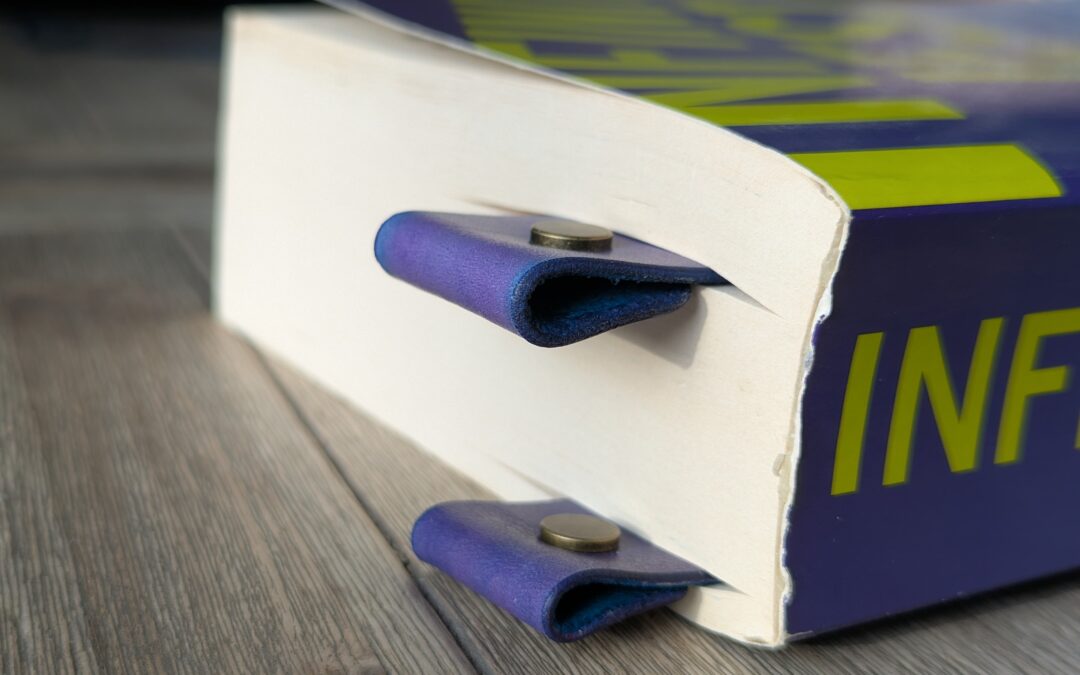
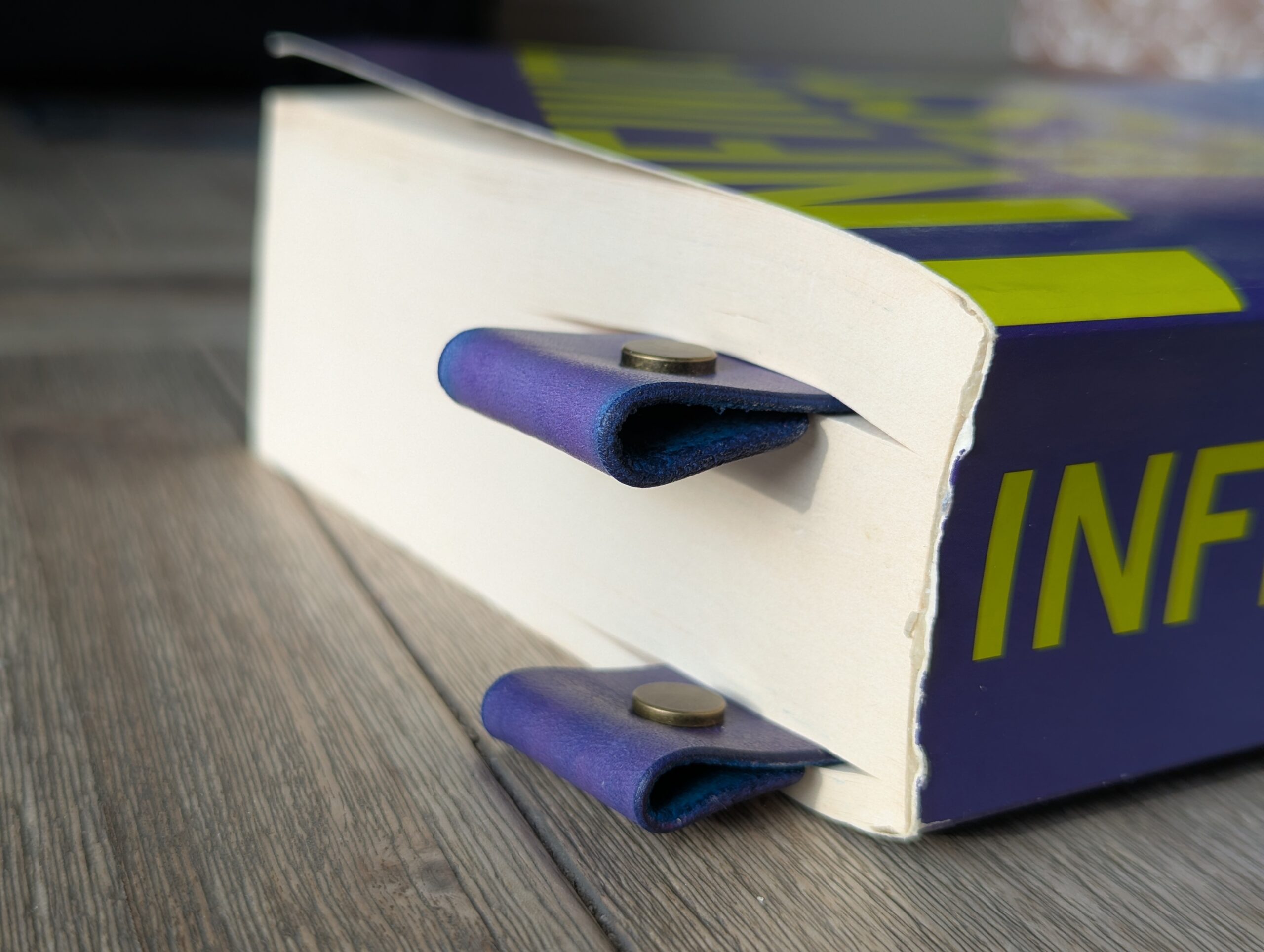
Have you ordered these bookmarks from Cary yet? Seriously awesome. 

Reflections

The pursuit of intense pleasure is only enjoyable as long as it meets our expectations. For Joelle van Dyne (aka Madame Psychosis), Too Much Fun just isn’t fun anymore. “It no longer delimits and fills the hole. It no longer delimits the hole” (p. 222) Molly Notkin’s party is going to be her OUT, her true exit from the cage. Here we are treated to another beautifully cinematic segment, as JvD walks the streets of Boston gathering the items she needs to freebase cocaine one final time. Echoing Erdedy’s habitual tossing of all paraphernalia (itself done with the short circuited expectation that this action will somehow influence one’s willpower), she rebuilds her weaponry – ready to aim it squarely at herself and eliminate her own map.

Joelle has never seen the completed assembly of what she’s appeared in, or seen anyone who’s seen it, and doubts that any sum of scenes as pathologic as he’d stuck that long quartzy auto-wobbling lens on the camera and filmed her for could have been as entertaining as he’d said the thing he always wanted to make had broken his heart by ending up” (p. 228)

Peppered within this lengthy section are many significant details about Infinite Jest V, that most fatal of all entertainments. Here we are party to practically the entirety of the sum of the details we receive throughout the novel. That they are delivered to us through JvD’s own words and reflections puts its own wobbly lens on the information.

She knows that it is an “allegedly fatally entertaining and scopophiliac thing” and coupled with the snippets of conversation at Molly’s party, it is revealed that the existence of IJ is known to the general public, and that it has already had a fatal impact on more than just the medical attaché’s household (“He said a good bit o Berkely isn’t answering their phone” – p. 233).

What does Joelle feel overhearing these conversations? Does she feel complicit in the creation of this deadly film? She does question her role in his suicide (“Did she kill him somehow, just inclining veilless over that lens?” – p. 231) Her own expectations in becoming JOI’s muse may have begun as a way to better learn film techniques from a master, but it is apparent that the relationship (though platonic) grew into something much, much heavier, ruining her relationship with Orin and further enabling her addiction.

The phone conversation between Hal and Orin also serves to further the narrative of the death of James, and also illuminates the incredibly broken family dynamics of the Incandenzas. Orin did not attend his father’s funeral, and did not have even the most rudimentary information about how he died. The reasons for Orin to break with familial (and social) expectations of mourning must be incredibly significant.

Hal’s encounter with the grief therapist is, obviously, all about expectations. The counselor flummoxes Hal. Hal wants this to be over, but he can’t seem to offer up the appropriate responses. Hal, the golden child, he of perfect test scores and a constant need to meet the expectations of teachers, parents, etc, is at a total loss. As he describes it to Orin, Lyle gave him some solid advice, and Hal was able to turn the tables and serve up what the therapist wanted.

Week Three

Week Three

Week Three

I read this section so quickly, as it just filled me with absolute glee. A few of my favourite bits are in this week’s reading and the pace is fast and furious.  We are also intoduced to Wallace’s increasingly-agitated use of ALLCAPS HEADLINES to really add some flavour to the narratives. This will be a long recap because so many disparate things have happened!

Recap

1. We spend a good amount of time at Ennet house, and learn so much about its history, location and residents including:

  • A brief history of the founder – Guy Who Didn’t Even Use His First Name, who encourages feldspar-munching as a sign of total surrender (p. 137)
  • Brief Interviews with Recovering Addicts – the selected transcripts of (mostly) unnamed residents as they talk to Pat Montesian. I love these small character studies. We now know that Bruce Green, former roomie of harelipped Tommy Doocey, is in Ennet , and that Mildred Bonk and Harriet Bonk-Green have hit the road. (p. 176-181).
  • A detailed description of the layout of the Enfield Marine Public Health Hospital grounds, including the neighboring units for  veterans, Alzheimer’s patients and The Shed, home to the ‘objay darts.’ (p. 193-198)
  • Don Gately – he of the unfortunate break-in that caused the medical attache’s death – has moved from resident to staffer at Ennet.
  • A moving description of ‘exotic new facts’ about various issues that arise with substance abusers (endnote 70 speaks to being able to become so ‘escapeless’ that one becomes no more than a ‘fine dusting of off-white ashy stuff’ – a contrast to the ‘escaping’ results of the Entertainment), and Tiny Ewell’s tattoo investigations, which are a great way to further introduce the Ennet residents. (p. 200-211)

2. These back-to-back vignettes that take place outside of the general actions of the month of November YDAU:

  • The hilarious story of Dwayne R. Glynn and the barrel of bricks – told through an email exchange. Poor guy. (p. 138-140)
  • Hal’s essay about Hill St Blues and Hawaii 5-0, written at age 12, predicting a ‘catatonic hero.’ (p. 140-142)
  • “Helen” Steeply’s article for Moment Magazine (p. 137) – as DFW does often, more information is divulged in the cheeky ALLCAPS title of this section (we now know that Steeply is undercover as a lady to interview Orin, and that James Incandenza committed SUICIDE BY MICROWAVE OVEN). Now we are reminded of Orin’s comments to Hal in the last section in Week Two when mentions he has met ‘a possibly very special somebody” and wants to learn more about Separatism. (p. 142). In the article, the description of the purse snatcher sounds a lot like ol’ Poor Tony. (p. 142-144)
  • a helpful description of the Canadian Anti-O.N.A.N. groups – Love the Calgarian Pro-Canadian Phalanx – especially now in these days of separatist talk. Maybe I’ll start this group! (p. 144)
  • And one of my favourite pieces – the rise and fall of videophony. As someone who HATES facetime, this describes exactly why. Though I also appreciate that in this instance you actually had to play back the video call to see your face. If Wallace only knew the horrors of having to watch yourself WHILE YOU ARE TALKING like we have to. (p. 144-151)
  • A description of the new O.N.A.N. flag “a snarling full-front eagle with a broom and a can of disenfectant in one claw and a Maple Leaf in the other and wearing a sombrero” (p. 153)

3. Over at E.T.A:

  • Urine tests are being held, and Pemulis has it all figured out. We now know that he is the one Kate Gompert mentioned who insists you ask him to “please commit a crime” when buying drugs. (p. 151-156)
  • We are introduced to the incredibly potent DMZ, which is also referred to on the Boston streets as Madame Psychosis. (p. 169-171)
  • A fair amount of (mostly sad) info about Michael Pemulis, our local drug dealer. Who is the “kid” from Ennet House who has sold him the DMZ?  It was heartbreaking that his mother wanted to be paid up front for any of his future earnings as a tennis pro (p. 154)
  • Tennis and the Feral Prodigy – obviously NOT written by Mario – agreed? (p. 172-176)

4. We flash back to Arizona, 1960:

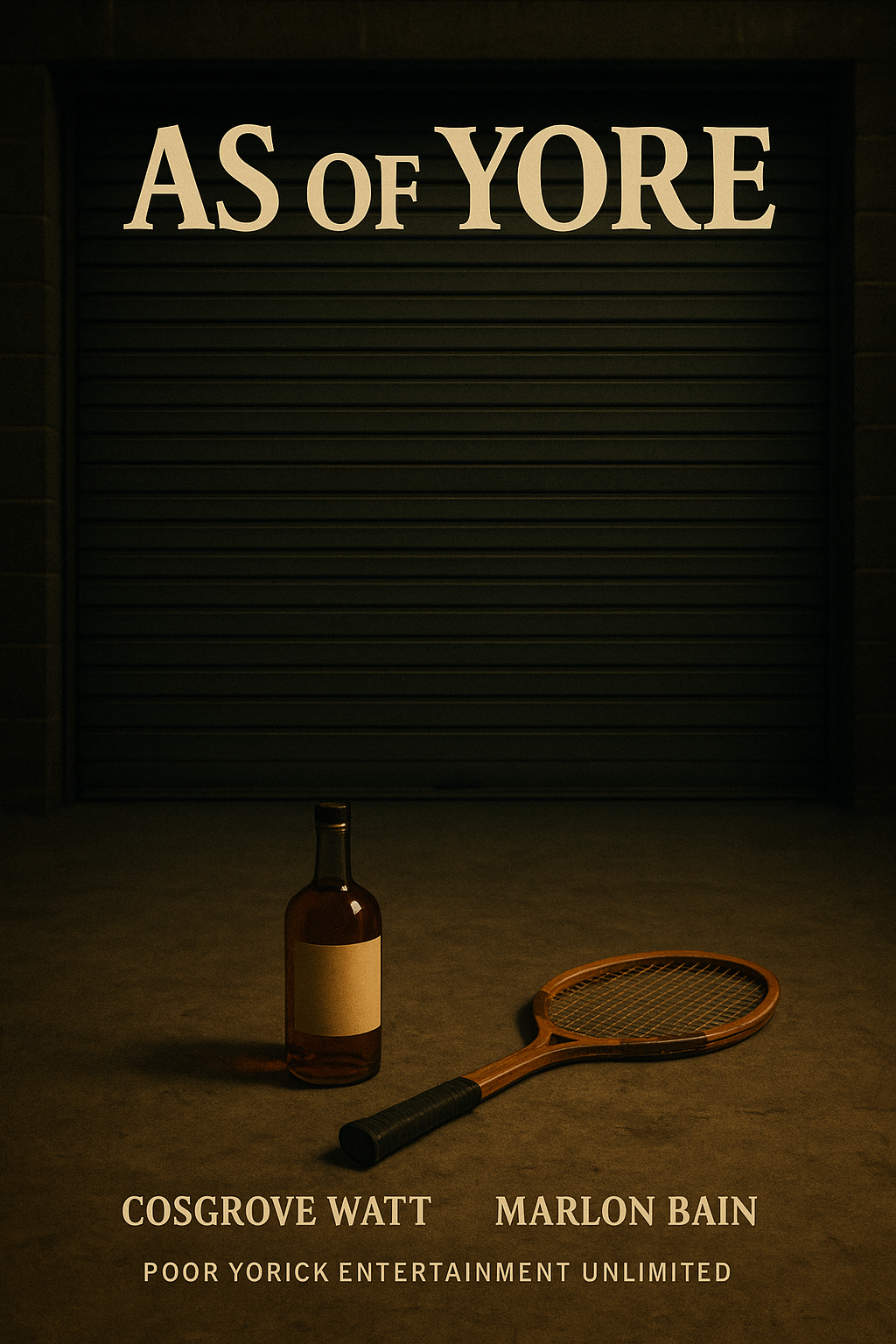
  • This sprawling one-sided conversation (p. 157-69) between father and son is the fleshed out story hinted at back on p. 63 describing how James’ father “decided to go down to his Raid-sprayed basement workshop an build a promising junior athelete the way other fatheres might restore vintage autos…” and was also the basis of the film As of Yore  “A middle-aged tennis instructor, preparing to instruct his son in tennis, becomes intoxicated in the family’s garage and subjects his son to a rambling monologue while the son weeps and perspires.”
  • We now have almost all of the info to figure out when subsidied time started. In the story of James Incandenza and his father, it is 1960, and James is 10, so he died in 2004 in our calendar year, which is the Year of the Trial Sized Dove Bar. We just need to know when YTSDB is situated in subsidized time, and it will be revealed! There have been clues about when each year takes place, but we will see the full list next week…
  • The description of the father’s knees against the tennis court….ugh.

5. A new location and character – WYYY station and Madame Psychosis (it’s October 22, YDAU):

  • Madame Psychosis has many many mentions in JOI’s filmography, and has her first role in Infinite Jest (IV).
  • The station is in M.I.T’s new Student Union building, which is literally shaped like a giant head. With eyeballs hanging out. Gross.
  • Mario loves listening to her program, and it seems he really wants to get Hal’s attention while she is reading the pamphlet for the Union of the Hideously and Improbably Deformed. I looked up so many of these diseases and deformities. Between this and the descriptions of the layout of the MIT bldg it was like taking an advanced biology class.  (p. 181-193)

Illustration by Cam Peters

Reflections

This section seems chaotic and disparate, but there are a few pieces that really vibe together. I am thinking specifically of “Tennis and the Feral Prodigy,” the conversation with James and his father, and the section on what spending time at Ennet house can teach you about addiction.  These three pieces all pulse with the same intention – dispensing advice in a repetitive, meditative way.  A companion to this is the list of maladies and deformities Madame Psychosis is reading on the air from the pamphlet from the UHID (Union of the Hideous and Improbably Deformed).

What are we taking from these sections?
Mario’s short film is a “how-to” of excellence in sport, but rather than being a hype-piece, it oozes exhaustion. We aren’t privvy to the visuals of this film, but can assume what we are reading is narration (by Hal) describing the scenes the viewer is seeing.  There is also an unreliability in it as a literary device, as the film is claimed to be written by Mario, but the language choices and interior descriptions seem very much more coded to Hal.

The senior Incandenza, who James also called “Himself,” goes on and on and on for twelve pages trying to instruct his gangly, nerdy son on how to take control of his body, while the father slowly loses control of his own faculties as the flask is drained dry. The one-sided nature of this conversation reminds us of the challenges James had communicating with his own son.  I loved the humor that was mined from this at the beginning as we only see James through his father’s exasperation (we can imagine how he’s trying to lift the garage door, and how he drops his book on the floor). His cadence reminded me of Foghorn Leghorn teaching the little chicken hawk.  It is again intended to be a “how-to” of excellence in sport, but falls so very short.

And the Ennet house’s “exotic new facts” are not just observations, but instructions on how to survive the vagaries of living in a recovery house, and what to expect from removing substances from your life.  The repetive start of each section with “That..” (Ducks, Newburyport anyone?) is a companion to the “This is..” and “Here is…” of Mario’s film.  These assertions give this info a gravitas in juxtaposition to the rambling lack of paragraphs in Jim’s dad’s words.

Collectively, these sections say to me Its hard. Everything is hard. We have no answers, even when we think we do. But I’m a pessimist 🙂

Standout phrases here include:

“Please learn the pragmatics of expressing fear: sometimes words that seem to express really invoke. This can be tricky” (p.175)

“Here is the trick to being neither quite a nerd or quite a jock. Be no one. It’s easier than you think” (p. 175)

“Madame Psychosis is one of only two people Mario would love to talk to but would be scared to try” (p. 190). Who would the other person be?

DMZ – a very bad thing.
We are given a brief outline of a drug Pemulis has recently copped and tucked away in the lining of his boating cap. The “incredibly potent” DMZ (aka Madame Psychosis) is synthesized using an obscure mold (mold!). The side effects are noted as “temporal” with reports of a radical change in perception of time (e. 57).

Bodies and Heads
Repeating themes of bodies and heads persist. There is the emphasis James’ father put on insisting that the head is the body, and that thoughts are just the sound of your body. The Brain of the MIT building and the Lungs of Enfield. 

And if you’ve made it all the way to the end of this post, I will ask you…what do you call three Canadians copulating on a snowmobile??


Week Two

Week Two

Week Two

More than a few people I have spoken to put IJ down around 100 pages in. So we have just passed a common attrition mark. Congratulations!

And ya know, it makes some sense – there’s a lot going on. We have our first giant endnote (the filmography, and maybe/definitely endnote 304) and a few really expansive sections that don’t seem to further the ‘story.’ 

But there are also many core examples of how DFW weaves information through seemingly unconnected narratives. I’ll recap what we’ve read and let’s start talking about it!

Recap

The majority of this section occurs during the Year of the Depend Adult Undergarment, in April (Marathe and Steeply) and November (mostly, except the segment of Mario and the telescope which happens in October). The yrstruly section is not dated by year, but we know it is Christmas eve.  We now know James Incandenza dies in the Year of the Trial Sized Dove Bar at age 54 (if we find out his birth year, we can place subsidized time on our calendar).

We learn more about James O Incandenza, including his scientific achievements which have helped bring in cold annular fusion (which has led to an independent US energy system, which then has led to the political strife currently between US and Canada), and his conceptual filmmaking. Through James’ filmography, we are given a significant amount of information about what has happened during subsidized time. It’s our first introduction to feral hamsters, outsized feral infants, the elimination of Troy, NY due to misplaced waste displacement vehicles, etc.   Even this far along we can already make the connection between JOI’s life and his work (see It Was a Great Marvel That He Was in the Father Without Knowing Him and the use of Stokely Darkstar in Accomplice! connecting JOI in some way to the narrative of yrstruly).

Orin is playing professional football as a punter in Arizona, has met someone new, and wants to talk about Canadian separatism.

We meet Kate Gompert, whose addiction to weed mirrors that of Erdedy’s in its intensity, and Hal’s in its secrecy. She also buys from Tommy Doocey. I was interested in how she described the ‘feeling.’ It’s one of the best descriptions of clinical depression I have ever read. The resident doctor is so fully fleshed out too, making this an amazing study of their dynamic as well.

The cartridge that took the medical attache is now responsible for upwards of 20 catatonic states in a comedically escalating scale.

We learn a lot about Enfield Tennis Academy in these sections, getting a better understanding of Michael Pemulis, Gerhardt Schtitt,  Jim Troletsch, James Struck, USS Millicent Kent, John Wayne, etc, plus weird guru Lyle. The conversations in the locker room and the Big Buddy meetings paint a vivid picture of the tennis academy’s athletic and academic rigour, as well as serving as many small character studies of the students.

This is also our first introduction to another important location in IJ – Unit #6 of the Enfield Marine VA Hospital (aka Ennet Recovery House)  and the first resident we are introduced to is Tiny Ewell (lil’ Burl Ives).

And now the beginning of the Marathe/Steeply section of the book. Remy Marathe is a duplicitous agent of the Assassins des Fauteuils Rollents (The Wheelchair Assassins), a Quebecois terrorist organization bent on disrupting the U.S.  He sits on a rocky overhang in Arizona, his shadow casting a huge swath across the city below. He is wheelchair bound, a machine pistol hidden under the blanket on his lap. Joining him on the ledge is Hugh Steeply, a U.S. field agent of the Department of Unspecified Services, in disguise as a woman. The two agents meet frequently to exchange intelligence.  A LOT of info is laid out here about the “entertainment,” Canada/US relations, indications that Marathe’s wife is very very ill, the hilarious descriptions of Steeply’s disguise, and the almost impossible (for me) to keep track of duplicity that is going on between them as agents.

We get a small aside about the feral hamsters and the description of the environmental impact of annular fusion being “a drooling and piss-colored bank of teratogenic Concavity clouds.”

Mario and U.S.S. Millicent Kent have a little moment in the woods, and a mysterious tripod is found in the trees.

A wonderful section by ‘yrstruly’ describing a drug run gone bad. The language used in this passage is absolutely delicious. “rickytick” “elemondae” “not 2Bdenied”

Reflections

The pursuit of individual happiness, which is a thread throughout the novel, often results in a sense of insecurity – we are overwhelmed with choices, moved along by impulses, and chase fleeting feelings of pleasure with little reflection on our own role in the larger world. This butts up against our own understanding of why we do what we do – why we strive, why we love, why we care.

Several sections in these pages speak to this, especially from characters who are motivated by participating in something larger than themselves:

  • In the conversation between Schtitt and Mario, Schtitt’s dismay at the ONAN-ist focus on “the happy pleasure of the person alone” (p. 83).
  • Marathe’s warning to Steeply to “choose with care. You are what you love”
  • The locker room conversation at ETA about striving for The Show, and the questions the Little Buddies have for their Big Buddies about how to navigate through ETA.

There are lots of  fragile personas as well, either unsure of or afraid to show their true selves. To wit:

  • Hugh Steeply, whose disguise Marathe describes as a “twisted parody of womanhood” (p. 93)
  • Marathe, a quadruple agent who posits perhaps he has “merely pretended to pretend to pretend to betray” (p. 94)
  • Orin, who often comes off as incredibly insecure (with his Subjects, and “complicated” relationship with Avril) at this point can vocalize his distaste at the high flying stunts he is made to do yet still has not vocalized his morbid fear of heights to anyone.
  • Tiny Ewell, hinted at that it may be hard for him to accept his addiction.
  • Poor Tony’s duplicity, too afraid to admit his role in ripping off Wo.

That endnote

Now what did you think of endnote 304? There are two endnotes in this section that point to it (39b. and 45). So you flip to 304, and find out its 7 goddamn pages long. Is it meant to be read now? Wallace has asked us to consider it twice, so it seems important to read now.

I would say that the information that comes from this story of le Jeu de Prochain Train is good know, rather than waiting until page 732 (!) to learn the backstory of the Wheelchair Assassins.  I actually loved the format of this endnote as well, reading it through James Struck’s eyes as he attempts to crib an overwritten academic paper for his History of Canadian Unpleasantness class. I laughed out loud when he described wanting to slap the author’s face “forehand, backhand, forehand” (p.1060).